









TL;DR
- Revenue execution is go-to-market strategy actually reaching and influencing the buyer: the consistent delivery of revenue strategy through daily seller work (content, preparation, conversations, follow-through), measured by pipeline health, win rates, and customer value rather than activity metrics. It is where revenue enablement, revenue intelligence, and revenue orchestration converge for the seller who’s in front of the buyer.
- Most teams have an execution gap, not a talent problem: scattered content, sellers spending less time in front of buyers, coaching without data, invisible buyer engagement, and disconnected measurement.
- Build a strategy in eight steps: define outcomes, map seller and buyer moments, identify what can be automated, check operating readiness, govern content, build readiness, capture buyer signals into CRM, and measure and adjust monthly.
- AI helps most when it’s governed: answers come from approved sources, and they’re verified before sellers see them.
- When evaluating platforms, start from your execution gaps and test 10 criteria, from field-selling fit to time to value.
Your team has a revenue strategy. Revenue execution is whether it shows up in front of the buyer.
What is revenue execution?
Revenue execution is the consistent delivery of revenue strategy through daily seller work, including content, preparation, conversations, and follow-through, measured by pipeline health, win rates, and customer value rather than activity metrics like content views or course completions.
Think of it this way: a revenue strategy is the play drawn on the whiteboard. Revenue execution is running that play in the field, every time, with every seller.
What revenue execution is not
- Not a dashboard. Dashboards report on execution, they don’t create it.
- Not a playbook sitting in a shared drive. If sellers can’t find what they need to drive a deal in their flow of work, it isn’t executing anything.
- Not a forecast call. Forecasting predicts outcomes. Execution drives them.
- Not only a CRM update. Logging activity is critical documentation, but not delivery. It’s the prep before and the follow-through after the meeting.
- Not just sales execution. Sales execution is what sellers do in the deal. Revenue execution also depends on managers, marketing, enablement, and operations.
Revenue execution vs. revenue enablement
Revenue enablement builds capability, preparing every seller for every buyer meeting with training, content, and practice. Revenue execution is that capability at work in front of buyers.
Execution is the moment that the seller uses the right case study in a meeting with a skeptical procurement lead, follows up with a tailored digital sales room, and moves the deal forward. Enablement is practice, execution is the game.
Strong enablement programs improve execution. A team can invest heavily in enablement and still see poor execution if there’s no way to connect readiness to action to outcomes.
Revenue execution vs. revenue intelligence vs. revenue enablement vs. revenue orchestration
| Dimension | Revenue execution | Umsatzanalytik | Umsatzgenerierung | Revenue orchestration |
|---|---|---|---|---|
| What it is | Revenue execution guides sellers through each live deal, with deal-specific preparation, CRM answers, and follow-through after every meeting. | Data and signals about deals, buyers, and markets used to guide decisions, including deal intelligence (signals about a specific deal that suggest next steps) and conversation intelligence (from recorded calls and meeting notes). | Programs and resources that build seller capability and readiness | Aligning people, process, data, and technology across revenue teams |
| Main question it answers | “Did the right thing happen before, during and after meeting the buyer?” | “What’s happening in this deal or market right now?” | “Are our sellers prepared to win?” | “Are our systems, data, and processes aligned to support revenue goals?” |
| Typical owner | Shared – revenue leadership, enablement, marketing, revenue operations | Revenue operations, revenue leadership | Enablement, marketing | Revenue operations |
How does revenue execution compare to revenue effectiveness?
Revenue execution and revenue effectiveness are closely related, but they answer different questions. Revenue execution asks whether teams carry out the revenue process consistently. Revenue effectiveness asks whether that work produces the right, lasting results.
Revenue execution: how the work gets done
Revenue execution is the day-to-day discipline of preparing for meetings, engaging buyers, following through on next steps, and keeping CRM data current. It’s measured by consistency. Do sellers follow the process, and do they follow it on every deal?
Revenue effectiveness: whether the work pays off
Revenue effectiveness is the quality of the outcome. It looks at whether seller activity turns into pipeline that converts, deals that renew, and accounts that expand, not just whether the activity happened. A team can hit its activity targets and still be ineffective if it spends them on the wrong accounts or the wrong conversations.
| Revenue execution | Umsatzeffizienz | |
|---|---|---|
| Core question | Are we doing the work consistently? | Is the work producing the right results? |
| Focus | Process, behaviors, follow-through | Outcomes: conversion, retention, expansion |
| Example signals | Meeting prep completed, CRM updates, content use, training completion | Win rate, deal velocity, renewal and expansion rates |
| Common failure | Missed steps, manual work, uneven follow-through | Busy teams that still miss targets |
How the two work together
Revenue execution is the foundation for revenue effectiveness. Without consistent execution, results depend on individual effort and are hard to repeat across teams. But execution alone doesn’t guarantee results, because teams also need to be doing the right things for the right buyers. The strongest teams measure both. Execution metrics show where the process breaks down, and effectiveness metrics confirm the process is working.
How revenue execution relates to revenue orchestration and deal intelligence
Revenue orchestration coordinates the teams, data, and systems behind a deal. Deal intelligence turns signals from that deal, like stakeholder engagement and meeting content, into a view of what to do next. Revenue execution is what happens when a seller acts on it before and after engaging with the buyer.
Why teams struggle with revenue execution, and how to fix it
Revenue execution breaks down when the systems connecting strategy to seller action have gaps. These are structural, not talent, failures.
Content scattered across systems
When approved materials live in shared drives, email threads, local folders, and multiple portals, sellers spend time hunting instead of selling.
Fix: Centralize content in a single governed platform with deal-stage and persona-based recommendations so the right asset surfaces in the seller’s flow of work.
Sellers waiting on subject-matter experts
In technical or regulated industries, sellers often can’t answer a buyer’s question without looping in an engineer or product specialist. That delay kills execution momentum.
Fix: Give sellers a governed AI assistant that draws answers from approved content so they can respond accurately without waiting for a callback. AI can also give sellers the opportunity to both learn, practice and perfect responses and conversations on their own before getting in front of a buyer.
Coaching without data
Managers want to coach effectively, but they’re often working from gut feel or lagging indicators within limited windows of opportunity.
Fix: Connect platform analytics to deal outcomes so managers can see which behaviors (content shared, preparation steps taken, buyer engagement patterns, follow through) correlate with wins, then coach to those specific actions.
Invisible buyer engagement
Sellers send a proposal and hear nothing. They can’t see which stakeholders opened it or whether it reached a decision-maker, and leaders can’t tell whether any of that activity moved the deal. Platform metrics like logins, views, and completions report on motion inside the system, not on whether it mattered.
Fix: Use digital sales rooms with buyer analytics to show how each stakeholder engages with shared content, then tie that activity to pipeline progression, win rate, cycle length, and quota attainment. Sellers get a clear signal for when and how to follow up, and leaders measure deal outcomes. These engagement signals are a form of deal intelligence: they show which stakeholders are active and where a deal may be stalling.
Disconnected measurement
Activity metrics (logins, views, completions) tell you what happened inside your platform. They don’t tell you whether it mattered.
Fix: Tie platform activity to pipeline progression, win rate, cycle length, and quota attainment so you’re measuring outcomes, not motion.
How to build a revenue execution strategy
A revenue execution strategy connects what leadership wants to happen with what sellers actually do before and after engaging with buyers. Here are eight steps, in order.
1. Define outcomes, not activities
Start with the commercial results you want to move: win rate, average deal size, cycle length, pipeline coverage, customer expansion. Work backward from there. If your strategy begins with “improve training completion rates” or “increase content usage,” you’re measuring the wrong thing.
2. Map seller and buyer moments that matter
Identify the five to ten interactions where execution quality most affects the outcome. For a medical device company, that might be the first clinical evaluation meeting, the procurement review, and the post-trial follow-up. For a CPG brand, it might be the line review, the planogram pitch, and the quarterly business review.
3. Identify opportunities for automation
Within the moments you’ve mapped, list the manual work that pulls sellers away from buyers: gathering account context before a meeting, logging notes into the CRM, drafting follow-up, researching the account, answering RFPs. Rank each task by the time it takes and its effect on the deal, then automate the highest-value ones first. Automate the work around the conversation, not the conversation itself, and keep a seller’s review in the loop wherever the output reaches a customer or the CRM.
4. Check operating readiness
Before rolling out new processes, audit three things:
- Is your data clean enough to support the strategy (CRM hygiene, product data, customer segmentation)?
- Is your content governed and current?
- Are managers committed to coaching, not just inspecting, their teams?
5. Govern content
Establish lifecycle management: every asset has an owner, a review date, and an expiration. Set role-based permissions so sellers see only what’s approved for their market, product line, or buyer segment. Surface outdated or risky files proactively, don’t wait for a seller to share a two-year-old case study.
6. Build readiness
Equip sellers with practice opportunities that mirror real buyer scenarios. Use AI roleplay, where the AI plays the buyer, for rehearsal and multilingual practice. Pair readiness programs with deal-stage-specific content recommendations so preparation connects directly to the next meeting, not to a generic curriculum.
7. Capture buyer signals and connect to CRM
Every buyer interaction – content views in a digital sales room, meeting notes, stakeholder engagement – should flow into your CRM without manual effort. This gives managers visibility into deals and gives sellers a clean record of what happened, reducing administrative burden. These signals are the raw material for deal intelligence.
8. Measure and adjust
Review outcomes monthly.
- Are win rates moving?
- Is cycle length compressing?
- Are new sellers ramping faster?
Use analytics that tie enablement platform activity to these outcomes, not just activity dashboards. Adjust content, coaching focus, and readiness programs based on what the data shows.
How to measure revenue execution
Measure revenue execution through outcomes and behaviors, not activities.
Outcome measures tell you whether execution is working:
- Pipeline health: coverage ratio, stage conversion rates, pipeline velocity
- Win rate: overall and segmented by deal size, product line, or seller cohort
- Customer value: expansion revenue, retention, deal size trends
- Buyer engagement: time spent selling, digital sales room engagement metrics
- Ramp time: how quickly new sellers reach quota
Behavior measures tell you what’s driving those outcomes:
- Content used in won vs. lost deals
- Preparation actions taken before meetings (briefings accessed, roleplay sessions completed)
- Buyer engagement depth (stakeholder views, time spent, content forwarded)
- Follow-up speed and quality after meetings
Activity measures tell you what happened, but not whether it mattered:
- Content views
- Training completions
- Platform logins
- Emails sent
Activity measures aren’t useless, but they’re leading indicators at best. If you build your execution dashboard around views and completions, you’re measuring effort, not impact.
Showpad analytics connect platform activity to win rate, cycle length, quota attainment, and ramp time, making the link between seller behavior and pipeline outcomes clear. This is the difference between a reporting layer and an insights layer.
How governed AI improves revenue execution for sellers, managers, enablement and marketing
Start with trust. In regulated and technical industries, an AI that generates plausible-sounding but unapproved claims is worse than no AI at all. Governed AI draws answers only from approved content sources, verifies them before they reach sellers, and follows customer-defined rules. This is the baseline, not a premium feature.
For sellers: AI reduces the effort between knowing what to do and actually doing it. An AI assistant answers product and competitive questions from approved content, so reps don’t wait for a subject-matter expert. A meeting agent prepares the seller based on deal intelligence, captures notes and voice memos, then syncs structured data to CRM, eliminating the administrative tax that pulls sellers away from selling. AI roleplay lets reps practice challenging conversations before they happen, including in multiple languages.
For managers: AI surfaces coaching data tied to deal outcomes. Instead of reviewing call recordings in bulk, managers can see which preparation behaviors and content choices correlate with wins, then coach to those patterns. Deal intelligence improves when meeting preparation, capture and buyer engagement signals flow into a shared view.
For enablement: AI shortens the path from knowing what sellers need to getting it in front of them. It can draft and update training content from approved sources, point sellers to the learning that fits their gaps, and give them roleplay practice at scale, so enablement teams spend less time on manual production. Because answers come only from approved sources, enablement keeps control of what sellers see and say.
For marketing: AI helps identify which content performs and which doesn’t. AI flags outdated or risky content before sellers prepare from and share it. Analytics show whether approved content is reaching buyers and whether it’s contributing to pipeline progression.
Why this matters more in regulated industries: A medical device rep sharing an AI-generated answer that no one has checked against current regulatory guidance creates real liability. A manufacturing seller citing outdated product specifications in a technical evaluation damages credibility and can delay or kill a deal. Governed AI, with approved sources, verified answers, and customer-defined controls, is what makes AI safe to deploy at scale in these environments.
The broader effect is that AI makes what top performers do naturally repeatable across sellers – through preparation, relevant content selection, and timely follow-up. Every seller can meet that standard, even without ten years of experience.
AI also makes deal intelligence practical: it turns buyer engagement and meeting content into a view of what to do next, and it keeps revenue orchestration moving by prompting the right person to act at the right time. Showpad contributes buyer engagement signals from Shared Spaces and meeting capture from Field Seller Agent.
What to look for in a revenue enablement platform that includes revenue execution
A revenue enablement platform connects content, readiness, revenue execution, buyer engagement, analytics, and AI in the seller’s workflow. In practice, it is the system sellers use before, during, and after buyer meetings to find approved content, prepare, engage stakeholders, capture what happened, and show how that activity ties to pipeline and revenue outcomes.
The right enablement platform depends on your problem. “Revenue enablement platform” means different things across sources. Match the platform type to your specific execution gaps.
Here’s a neutral evaluation checklist:
| Criterion | What to evaluate in a revenue enablement platform | Why it matters for revenue execution |
|---|---|---|
| Fit for field selling | Mobile experience, offline access, large catalog support | If your sellers work in person, the platform must work where they do |
| Governed content | Approval workflows, lifecycle management, role-based permissions | Outdated or unapproved content is an execution risk, especially in regulated industries |
| KI-Governance | Verified answers, approved sources, customer-defined controls | Ungoverned AI creates liability; governed AI creates confidence |
| Buyer engagement visibility | Stakeholder-level analytics in shared content experiences | Sellers need signals, not silence, after sharing content |
| Analytics tied to outcomes | Connection between platform activity and win rate, pipeline, revenue | Activity metrics alone don’t tell you if execution is improving |
| CRM integration depth | Bi-directional sync, configurable field mapping, meeting data push | If data doesn’t flow to CRM, it doesn’t exist for the rest of the organization |
| Security and compliance | SOC 2, GDPR, industry-specific certifications | Table stakes, but verify depth – especially for healthcare, financial services, and manufacturing |
| Verkäuferübernahme | Mobile UX, speed, low friction, offline capability | A platform sellers don’t use doesn’t execute anything |
| Services and support | Implementation, ongoing enablement, customer success | Execution is a practice, not a deployment — you need a partner, not just a vendor |
| Time to value | Setup effort, admin skill needed, time to first results | Slow rollouts delay the outcomes you bought the platform for |
When evaluating platforms, start with your execution gaps, where strategy breaks down before it reaches the buyer, and evaluate platforms against those gaps.
Revenue execution for field selling and complex industries
Revenue execution for field-selling teams in complex, regulated industries requires capabilities that many platforms ignore: offline access, large product catalogs, compliance-governed content, support for long buying committees, and solutions built for in-person meetings, not just video calls.
Many platforms don’t address these needs. Industries like manufacturing, CPG, and medical devices share execution challenges that other platforms don’t solve.
Offline access is non-negotiable. Field sellers meet buyers in factories, hospitals, distribution centers, and retail locations, places where reliable internet isn’t guaranteed. If a seller can’t pull up the right technical spec or compliance document without a connection, execution fails at the point of impact.
Large product catalogs demand smart navigation. A medical device rep may carry thousands of SKUs across dozens of product families. Finding the right configuration, comparison sheet, or regulatory document in the moment, not back at the office, separates a productive meeting from a wasted one.
Compliance and content governance aren’t optional. In regulated industries, sharing an outdated data sheet or an unapproved claim is a legal and regulatory risk. Lifecycle-manage content with approvals, expiration dates, and role-based permissions.
Long buying committees need multi-stakeholder engagement. A single deal in manufacturing might involve procurement, engineering, operations, finance, and C-suite sponsors. Execution means tailoring content and conversations to each stakeholder’s concerns and tracking engagement across the full committee.
In-person meetings still drive decisions. For many field-selling teams, the most important moments happen face-to-face. Execution means capturing what happened in those meetings — decisions made, objections raised, next steps agreed – and syncing it back to the CRM without requiring a seller to spend 30 minutes on manual data entry.
How does Showpad support revenue execution?
Your strategy only works if it reaches the buyer. Showpad is the AI-native revenue effectiveness platform built for field-selling organizations, and revenue execution is one of its core pillars: helping sellers see what’s happening on a deal and act on it, in the flow of their work.
Before the meeting. Field Seller Agent turns your CRM data, meeting transcripts, and field notes into deal intelligence: a Meeting Prep briefing for each upcoming meeting. Roleplay AI lets sellers rehearse the conversation first.
In the meeting. Genie answers questions about accounts and opportunities in plain language from live Salesforce data, and only surfaces what each seller is permitted to see.
After the meeting. Sellers speak their update, and after they confirm it, Field Seller Agent writes it to the CRM, even offline on iOS.
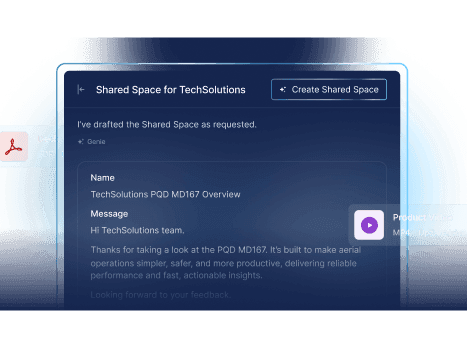
Between meetings. Shared Spaces add deal intelligence from the buyer’s side: which stakeholders are engaged and which have gone quiet, so sellers know when and how to follow up.
Just Eat’s reps save an average of 3.2 days per month and take 40% more post-meeting actions with the Showpad Experience App they built. Together, these capabilities contribute to deal intelligence through buyer engagement signals and meeting capture.
Häufig gestellte Fragen
Revenue execution is the consistent delivery of revenue strategy through daily seller work – content, preparation, conversations, and follow-through – measured by outcomes. Revenue enablement builds the capability; revenue execution is that capability applied in front of buyers. Enablement is preparation. Execution is performance.
A revenue execution solution connects content, readiness, buyer engagement, analytics, and AI in the seller’s workflow so strategy reaches the buyer consistently. The term means different things across sources – match the platform type (ERP-layer, CRM-automation, or field-enablement) to your specific execution problem.
Start by defining commercial outcomes (win rate, pipeline health, deal size), then map the seller and buyer moments that most affect those outcomes. Audit operating readiness – data, content governance, manager commitment – before building programs. Govern content, build readiness, capture buyer signals, and measure outcomes monthly.
Teams struggle because of system gaps: content scattered across platforms, sellers waiting on experts, coaching without data, and invisible buyer engagement. Fixes include centralizing governed content, deploying governed AI assistants for in-the-moment answers, connecting analytics to deal outcomes, and using digital sales rooms with buyer-level engagement tracking.
There’s no universal ranking – the right solution depends on your execution gaps. Evaluate against criteria that matter: field-selling fit (mobile, offline), governed content, AI governance, buyer engagement visibility, outcome-tied analytics, CRM integration depth, security, seller adoption, and services. Match the platform type to your problem.
Prioritize 10 criteria: fit for field selling, governed content with lifecycle management, AI governance with verified answers, buyer engagement visibility, analytics tied to outcomes (not just activity), CRM integration depth, security and compliance certifications, seller adoption indicators, quality of services and support, and time to value.
Revenue execution is the outcome, strategy delivered through seller work. Revenue intelligence is data and signals about deals and buyers that guide decisions. Revenue enablement is the programs and resources that build seller capability. All three contribute to revenue results; execution is where they converge in front of the buyer.
They align on shared commercial outcomes (win rate, pipeline health, ramp time), use a common data view connecting platform activity to CRM results, and maintain a joint review cadence. Enablement owns content and readiness; RevOps owns process and data architecture; both share responsibility for outcome measurement and platform optimization.
For reps, AI provides instant answers from approved content, captures meeting notes, and enables practice through roleplay. For managers, AI surfaces coaching data tied to deal outcomes and improves deal visibility. The key requirement is governed AI: approved sources, verified answers, customer-defined controls, especially in regulated industries.
Revenue orchestration coordinates the teams, data, and systems behind a deal so the right next step happens at the right time. Deal intelligence is the set of signals about a specific deal – buyer engagement, stakeholder activity, meeting content — that help a team decide what to do next. Both support revenue execution.