







What is Account Based Selling?
The definition of account based selling is to treat each account as its own market.. This form of selling targets companies or accounts, rather than targeting individual contacts within the company. First, your organization identifies a set of target accounts. Then, sales and marketing work together to offer targeted content to contacts within each of the target accounts. This personalized process is used to nurture the accounts and their contacts through the buyer’s journey and ultimately to become a customer.

How Does Account Based Selling Work?
Account based selling can be especially effective because it identifies and addresses the needs and interests of all key stakeholders within an account. That’s because effective account based selling offers the contacts within the accounts personalized, customized content.

How Does Sales and Marketing Alignment Impact Account Based Selling?
Account-based selling is an approach that requires collaboration and input from both marketing and sales. As a result, if your sales and marketing teams don’t see eye-to-eye, your account-based strategy will never be successful.
For account based selling to be successful, your marketing and sales teams must operate under the same goals: If your sales and marketing teams are working toward separate goals, they are far less likely to be engaged with one another and they might even pursue competing initiatives. A common goal across marketing and sales ensures the 2 teams have the motivation to work together.
Your sales and marketing teams also need to share reporting for successful account based selling.: If each team uses separate dashboards and metrics, they will never be on the same page.. Keep everyone on the same page by using common metrics, dashboards and reports.
Likewise, for successful account based selling, sales and marketing: Although sales and marketing must have technology-based tools to create and maintain content, communicate, create feedback loops and generate meaningful analytics. Tech tools are a must-have in today’s selling environment.
Once your teams are aligned, you can move on to the next step of the process.
What is sales enablement?
Sales enablement means equipping sellers with the right resources to shorten the sales cycle, increase win rates, and sign bigger deals. Sales enablement, as a function, evolved in response to the evolution of the buyer. With a wealth of information available online, buyers are in more control of the buying process than ever before. In many cases, buyers can be more than halfway through their journey before they reach out to a seller.
What does this mean? It means that sellers must take the initiative to reach out to buyers, winning the buyers’ attention much earlier in their journey. This is a task typically associated with marketing. So, sellers need to think more like marketers, and marketers need to think more like sellers – about the day-to-day experiences of buying and selling.
Sales enablement is providing customer insights, content and coaching to your sales team throughout the selling process. Sales enablement is the process of providing your sales team with the resources they need to close more deals. These resources may include content, tools, knowledge, and information to effectively sell your product or service to customers.
Ultimately, the goal of sales enablement is to align the interdependent elements of sales, marketing, customer support, product management, brand management, legal, and human resources to boost seller productivity and improve the buyer experience. In a nutshell, sales enablement strategy is to provide salespeople with what they need to successfully engage the buyer throughout the buying process.

What are the components of sales enablement software?
The most important sales enablement software components include content management, content creation, customer engagement, presentation management, sales onboarding/training/coaching and sales communication. All of these components are critical to the optimal functioning of sales enablement software.
What are the benefits of enterprise sales enablement software?
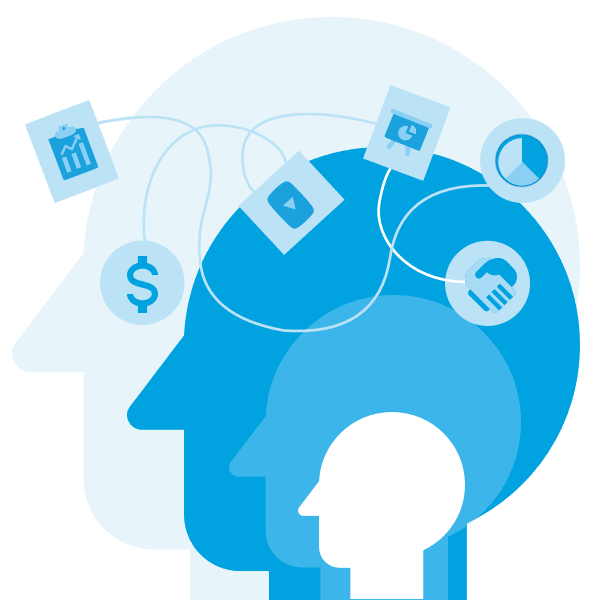
Adoption of the right sales enablement software platform delivers many benefits. The first one is improvement in the orchestration of the sales process through technology. The second one is improved communication in marketing and sales through quality content. The third one is talent management through onboarding/coaching/evaluating employees. The fourth pillar is enhanced customer satisfaction, due to an optimized buyer’s journey. The fifth primary benefit of adopting an enterprise sales enablement platform is improved collaboration and process efficiencies.
How does Showpad Sales Enablement Empower Account Based Selling?
Showpad is a global leader in revenue enablement technology, providing teams with a modern selling solution for maximizing hybrid sales.
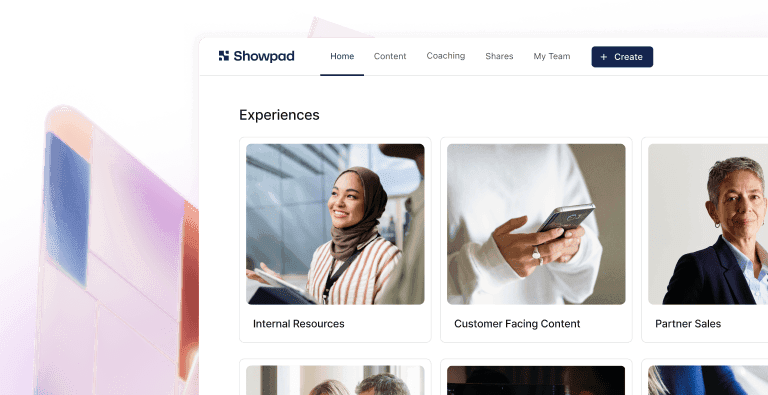
Showpad will support your current needs and future growth because we help prepare sellers by making it easy to find the latest on-brand content in a central location for every opportunity. Showpad also supports sales onboarding, training, and coaching to maximize teams’ productivity, increase active selling time, and accelerate sales rep onboarding time.
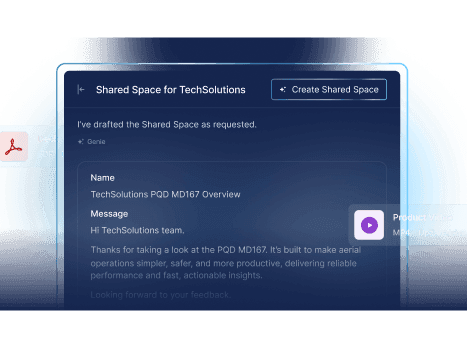
- Sellers can more effectively engage buyers by leveraging Showpad to more efficiently prepare for and personalize sales presentations. Sellers can easily share the most relevant content with buyers from any device and collaborate with all stakeholders in one branded location
- By tracking their buyer’s level of interest through Showpad insights, sellers can optimize their performance, shorten their sales cycles, and have increased visibility into buyer intention
- Sales leaders can identify and replicate their top sellers’ behavior to scale success, decreasing the overall long-term cost of sales
- Marketing can leverage our bottom of funnel insights and buyer insights helping marketing identify the content and experiences that engage buyers and drive revenue
- Administrators can support content management and distribution of content as well as sales training efforts at scale from one unified platform, decreasing the administrative burden of launching and maintaining a Sales Enablement program
Want to learn more about Showpad?
Contact us for a personal assessment of your enablement journey.