







Enterprise Sales Development Representative
Simply stated, an enterprise sales development representative (SDR) is an inside sales representative that focuses on outreach, prospecting, and lead qualification. SDRs don’t focus on closing business, but connecting with as many leads as possible and determining if they’re a good fit.
SDRs move leads through the sales pipeline. They connect and learn about their businesses and needs. If a prospect is a good fit, SDRs schedule next steps with sales reps higher in the organization.

An enterprise SDR sales person fills this role in the process of selling to large organizations. Another term for enterprise selling is complex selling. Enterprise selling is far different from what’s called transactional selling, like a typical retail sale. That’s because enterprise most often involves months of effort, many meetings and interactions, multiple decision-makers, competitive bids, big budgets, complex negotiations, multi-year contracts, and a major impact on the organization’s operations. While very challenging, successful enterprise selling can lead to significant revenues, enhanced brand credibility, and profitable multi-year business relationships for you.
How do I succeed in enterprise sales?
While there are many factors to successful enterprise selling, there are 4 top principles for you to consider. In simple terms, those 4 principles are: know your customers, know your products, know your solutions and build long-term relationships.
To know your customers, you need to research the marketplace and your customer, of course. Even more importantly, you need to experience your customers’ products and services. All the reading and research in the world won’t match actually experiencing your customers’ products and services.
To know your products requires focus and effort. It’s imperative that you understand the features and functionality of the products you’re selling. This can be especially challenging as the product you’re selling may evolve over the course of the sales cycle. Don’t rely on others in your organization to explain the value of your product to your customer. You must have this knowledge and the ability to expertly explain the features, benefits, and unique advantages of your product.
Beyond knowing your products, you must know how your products can become solutions to your customers’ needs. It’s not up to your customer to connect the dots for you. You need to be able to articulate how your product delivers solutions to real business problems. Often this means being able to provide relevant case studies and success stories at the right time and in the right words.
Ultimately, successful enterprise selling requires the building and nurturing of strong, long-term relationships.
What are the challenges of enterprise selling?
There’s no denying, enterprise selling entails many formidable challenges. Here are just a few.
- First, enterprise sales cycles are nearly always lengthy, from many months to oftentimes more than a year.
- Second, the discovery process is far more complicated and involved than that required for a smaller, transactional sale.
- Third, the requirement for social proof and projected ROI is far more important in enterprise selling than in transactional selling.
- Fourth, things change! Over the course of a lengthy enterprise sales cycle, the customer’s business, its decision-makers, the external business environment, your products, your pricing, your sales team and the positioning of your competitors may change, all with the potential to impact the outcome of your enterprise sales efforts.
- Fifth, enterprise selling almost always means multiple decision-makers and often the very real and active presence of office politics. It can be challenging to identify key influencers from the outside and then win their support. Sixth, once you do identify the right players, you may have just one shot to secure their interest, their support, and their business.

What is enterprise sales enablement?
In a nutshell, enterprise sales enablement means equipping sellers with the right resources to shorten the sales cycle, increase win rates, and sign bigger deals. Enterprise sales enablement, as a function, evolved in response to the evolution of the enterprise buyer. With a wealth of information available online, enterprise buyers are in more control of the buying process than ever before. In many cases, enterprise buyers can be more than halfway through their journey before they reach out to a seller.
What does this mean? It means that enterprise sellers must take the initiative to reach out to enterprise buyers, winning the buyers’ attention much earlier in their journey. This is a task typically associated with marketing. So, sellers need to think more like marketers, and marketers need to think more like sellers – about the day-to-day experiences of enterprise buying and selling.

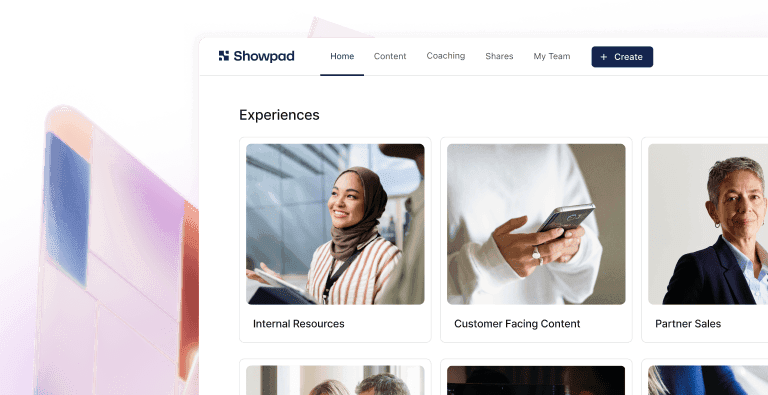
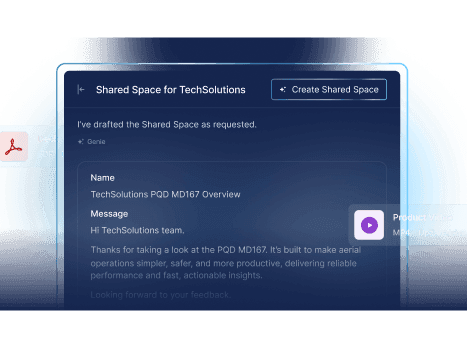
Enterprise sales enablement is providing customer insights, content and coaching to your sales team throughout the enterprise selling process. Sales enablement is the process of providing your sales team with the resources they need to close more deals. These resources may include content, tools, knowledge, and information to effectively sell your product or service to customers.
Ultimately, the goal of sales enablement is to align the interdependent elements of sales, marketing, customer support, product management, brand management, legal, and human resources to boost seller productivity and improve the buyer experience. In a nutshell, sales enablement strategy is to provide salespeople with what they need to successfully engage the buyer throughout the buying process.

What is the importance of enterprise sales enablement?
Sales enablement plays a critical role in developing your enterprise sales organization beyond a few top achievers. Enterprise sales enablement provides all salespeople with the best practices, knowledge, tools, and resources required to be successful.
An overwhelming majority of organizations experience significant growth in their sales as a result of enterprise sales enablement. What’s more so, organizations with sales enablement achieve a far better win rate on their forecasted deals, compared to businesses without it.
The importance of sales enablement comes down to the fact that salespeople are more likely to succeed in closing deals if they have the necessary tools, knowledge, practice, and resources.

What is Demand for Sales Enablement?
- Demand for sales enablement platform technology has made it a core tech stack purchase for organizations with both direct and partner selling channels.
- Sales enablement platforms continue to deepen and broaden machine learning capabilities such as conversational intelligence and analytics to provide more insights about buyers and sellers.
- Sales enablement platforms have broadened their offerings with connections to solutions such as sales engagement and content systems through partner ecosystems.
- Digital sales rooms (DSRs) are now offered by some sales enablement platform vendors through persistent microsites for internal/external collaboration, embedded video conferencing and engagement, sentiment and emotion analysis.
- Live in-call conversation guidance is nascent but available in some offerings, and it can provide great value to all types of
Want to learn more about Showpad?
Contact us for a personal assessment of your enablement journey.