






Prospecting Email
Building a strong prospect list is arguably one of the most important steps in the sales process. Many salespeople spend a big chunk of their time trying to qualify leads that are worth pursuing. In today’s market, this can include prospecting emails, social posts and search campaigns.
When it comes to a template, there’s no need to reinvent the wheel. There are many templates to choose from that have been used and improved over time. Here are ten ideas on how to get the prospect engaged with the content in your email:
- Respond to social media posts
- Ask if they’d benefit from access to market research
- Ask for their opinion
- Provide industry specific insights
- Congratulate a new hire
- Run a customized analysis or report for their business
- Offer an introduction
- Reference a common acquaintance
- Publish and share original content
- Responds to content your prospect has published

Elements of a Prospecting Email
Email prospecting provides some unique advantages over other prospecting tactics. It’s less intrusive than cold calling and allows sellers to send personalized messages in large quantities without sacrificing on quality. Although there are many different templates to choose from, there are some basic elements and practices that you’ll want to keep in mind as you construct your emails.
- Do the research and include information that shows you’ve done so.
- While it’s not realistic to craft a personalized email from scratch for every prospect, building a library of templates that speak to different scenarios provides a shortcut to creating a tailored message for each lead on your list.
- Use a clever subject line to cut through the clutter and grab attention.
- Keep the content reasonably short.

Perfect Sales Pitching
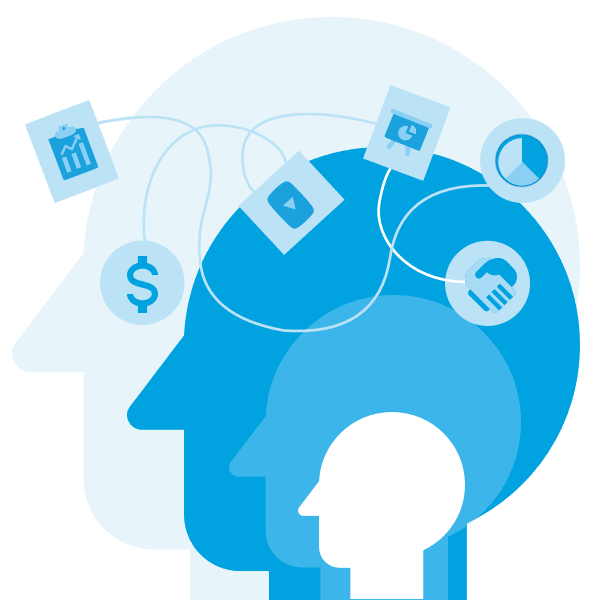
In addition to finding the right prospects, it’s important to know that they are more demanding than ever. They have shifted how they buy. Old-school tactics like scripted sales pitches and cold calls just don’t cut it anymore. You can arm yourself with tactics and technology to stop chasing after buyers and start making it easy for them to buy from you. Building and perfecting your sales pitch is the first step in achieving this. Here’s a framework to use as you prepare.
- Include Content that Resonates. Access content tailored to the prospect’s business challenges and unique needs
- Bring Advisors that are Prepared. Provide personalized expert advice that goes beyond a generic sales pitch
- Start Conversations that Add Value. Be prepared to have consistent, high-quality conversations with every member of the customer’s team
- Propose Interactions that are Engaging. Collaborate during and after the meeting on the perfect solution for your customers’ business
Pitching in Different Scenarios
The first step in being able to articulate a perfect pitch is understanding how to tailor your pitch to different scenarios. There are four main pitching scenarios that you need to be prepared for:
- Short Customer Story Pitch: This is the pitch you will do most often during calls
- Long(er) Customer Story Pitch: This is the pitch you will use if you have a longer more in-depth call
- Industry/Persona Led Pitch: You will use this pitch when someone just wants to know what the product does from a practical high-level perspective, but you still want to tailor to their persona/industry or using your research
- Elevator Pitch (General): You will use this pitch when your prospect is impatient and you can tell they are annoyed and won’t really listen until you give them a high-level explanation of the product

Pitching Per Persona
It’s also important to tailor your pitch to the person you’re speaking to, no matter which of the above pitches you’ve chosen. To help prepare you, below is an overview of some highlights per persona that can help you build more impactful pitches!
SALES LEADERSHIP
● They think about revenue & targets (hire more people, roll out new products, M&A or change something in sales process)
● They want to hold managers accountable for properly coaching reps
● Length of sales cycle, new hire ramp up time, wins over the competition, ROI of tools
MARKETING LEADERSHIP
● Marketing ROI, visibility on what drives sales conversations, 360° view of customer experience
● Making sure reps deliver the right messaging on marketing material or events etc. & making sure everybody is aligned on messaging & value proposition
SALES OPERATIONS
● Driving efficiencies in the sales process
● Average deal size, time to first sale, win rate over the competition, deployment, ease of use
How Does Sales Enablement Help with Prospecting?
Enterprise sales enablement means equipping sellers with the right resources to shorten the sales cycle, increase win rates, and sign bigger deals. Sales enablement, as a function, evolved in response to the evolution of the enterprise buyer. With a wealth of information available online, buyers are in more control of the buying process than ever before. In many cases, enterprise buyers can be more than halfway through their journey before they reach out to a seller.
What does this mean? It means that sellers must take the initiative to reach out to enterprise buyers, winning the buyers’ attention much earlier in their journey. This is a task typically associated with marketing. So, sellers need to think more like marketers, and marketers need to think more like sellers – about the day-to-day experiences of buying and selling.
Enterprise sales enablement is providing customer insights, content and coaching to your sales team throughout the enterprise selling process. Sales enablement is the process of providing your sales team with the resources they need to close more deals. These resources may include content, tools, knowledge, and information to effectively sell your product or service to customers.
Ultimately, the goal of enterprise sales enablement is to align the interdependent elements of sales, marketing, customer support, product management, brand management, legal, and human resources to boost seller productivity and improve the buyer experience. In a nutshell, a sales enablement strategy is to provide salespeople with what they need to successfully engage the buyer throughout the buying process.
What is the importance of sales enablement?
Motivating your sales team is not the only critical component of a successful business organization. Sales enablement plays a critical role in developing your enterprise sales organization beyond a few top achievers. Enterprise sales enablement provides all salespeople with the best practices, knowledge, tools, and resources required to be successful. An overwhelming majority of organizations experience significant growth in their sales as a result of enterprise sales enablement. What’s more, organizations with sales enablement achieve a far better win rate on their forecasted deals, compared to businesses without it. The importance of sales enablement comes down to the fact that salespeople are more likely to succeed in closing deals if they have the necessary tools, knowledge, practice, and resources.
Want to learn more about Showpad?
Contact us for a personal assessment of your enablement journey.