







Sales Sayings
A critical part of a successful sales organization is keeping the team motivated. If you’re looking for inspirational quotes for your colleagues and customers, here’s a list we consider to be the top 20:
- “Our greatest weakness lies in giving up. The most certain way to succeed is always to try just one more time.” – Thomas Edison
- “In the middle of every difficulty lies opportunity.” – Albert Einstein
- “The secret of getting ahead is getting started.” – Mark Twain
- “Don’t watch the clock; do what it does. Keep going.” – Sam Levenson
- “What we dwell on is who we become.” – Oprah Winfrey
- “It is not your customer’s job to remember you. It is your obligation and responsibility to make sure they don’t have the chance to forget you.” – Patricia Fripp
- “Setting goals is the first step in turning the invisible into the visible.” – Tony Robbins
- “Most people think ‘selling’ is the same as ‘talking’. But the most effective salespeople know that listening is the most important part of their job.” – Roy Bartell
- “If you aren’t going all the way, why go at all?” – Joe Namath
- “It’s not about having the right opportunities. It’s about handling the opportunities right.” – Mark Hunter
“You can’t give up! If you give up, you’re like everybody else.” – Chris Evert
- “I have stood on a mountain of no’s for one yes.” – B. Smith
- “Care enough to create value for customers. If you get that part right, selling is easy.” – Anthony Iannarino
- “If you don’t risk anything, you risk even more.” – Erica Jong
- “If your sales have tanked, maybe the issue is not your lack of sales skills, but you are rushing the knowing and trusting aspects of the buying process.” – Leanne Hoagland-Smith
- “You need to be able to paint a picture in a conversation. The lost part of sales is the storytelling side.” – Richard Harris
- “You can’t give up! If you give up, you’re like everybody else.” – Chris Evert
- “The best salespeople wonder what it would be like to be in the other person’s shoes. They know they can’t play that game unless they continually strive to train themselves in how we as human beings communicate.” – Bob Phibbs
- “Sales is an outcome, not a goal. It’s a function of doing numerous things right, starting from the moment you target a potential prospect until you finalize the deal.” – Jill Konrath
- “Selling is really about having conversations with people and helping improve their company or their life. If you look at it like that, selling is a very admirable thing to do.” – Lori Richardson
What is enterprise selling?
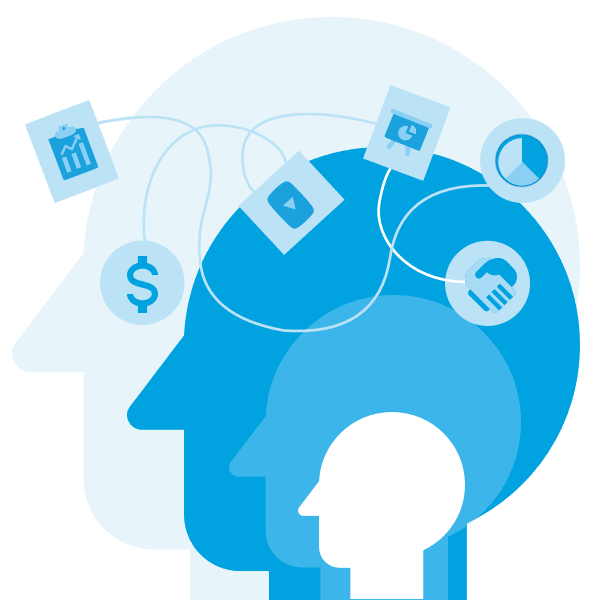
Simply stated, enterprise selling is the process of selling to large organizations. Another term for enterprise selling is complex selling. Enterprise selling is far different from what’s called transactional selling, like a typical retail sale. That’s because enterprise most often involves months of effort, many meetings and interactions, multiple decision-makers, competitive bids, big budgets, complex negotiations, multi-year contracts, and a major impact on the organization’s operations. While very challenging, successful enterprise selling can lead to significant revenues, enhanced brand credibility, and profitable multi-year business relationships for you.

What are the challenges of enterprise selling?
There’s no denying, enterprise selling entails many formidable challenges. Here are just a few.
First, enterprise sales cycles are nearly always lengthy, from many months to oftentimes more than a year.
Second, the discovery process is far more complicated and involved than that required for a smaller, transactional sale.
Third, the requirement for social proof and projected ROI is far more important in enterprise selling than in transactional selling.
Fourth, things change! Over the course of a lengthy enterprise sales cycle, the customer’s business, its decision-makers, the external business environment, your products, your pricing, your sales team and the positioning of your competitors may change, all with the potential to impact the outcome of your enterprise sales efforts.
Fifth, enterprise selling almost always means multiple decision-makers and often the very real and active presence of office politics. It can be challenging to identify key influencers from the outside and then win their support.
Sixth, once you do identify the right players, you may have just one shot to secure their interest, their support, and their business.
Who owns sales enablement?
Sales enablement is owned jointly by Sales and Marketing. There are six simple organizational rules that can help you structure your program.
- First, both Sales and Marketing must contribute to the formation of a dedicated sales enterprise team. The creation of a dedicated team, with a single purpose and shared goals, is key to the success of enterprise sales enablement.
- Second, Sales and Marketing need to collaborate on what resources are needed for the program. Common resource requirements include content, conversation guides and sales training.
- Third, Marketing is most often responsible for creating the vast majority of this information.
- Fourth, Marketing should bear most of the responsibility for training the sales organization.
- Fifth, Sales operations play a crucial role in operationalizing the information sales receives as part of the sales enablement program.
- Sixth, it’s up to sales management to make sure the sales enablement program is being put into practice. When it comes to sales enablement, Marketing is a better creator and Sales is a better enforcer.
Want to learn more about Showpad?
Contact us for a personal assessment of your enablement journey.