








Successful Enterprise-level Sales Enablement.
Get the Facts.
Is it your 2022 mission to maximize the effectiveness of your enterprise-level sales organization?
Start here to see how Showpad can make it happen.
And read on for the answers to 10 key questions about enterprise selling, enterprise-level sales enablement and Showpad’s powerful sales-enablement software solution.
What is enterprise selling?
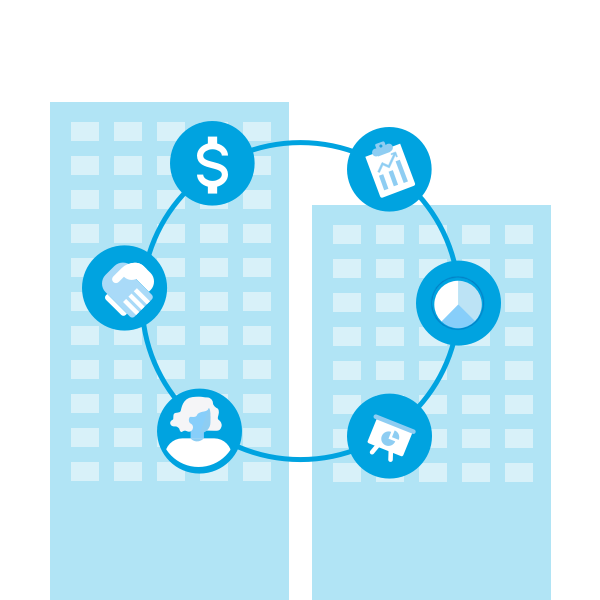
Simply stated, enterprise selling is the process of selling to large organizations. Another term for enterprise selling is complex selling. Enterprise selling is far different from what’s called transactional selling, like a typical retail sale. That’s because enterprise most often involves months of effort, many meetings and interactions, multiple decision-makers, competitive bids, big budgets, complex negotiations, multi-year contracts, and a major impact on the organization’s operations. While very challenging, successful enterprise selling can lead to significant revenues, enhanced brand credibility, and profitable multi-year business relationships for you.
What are the challenges of enterprise selling?
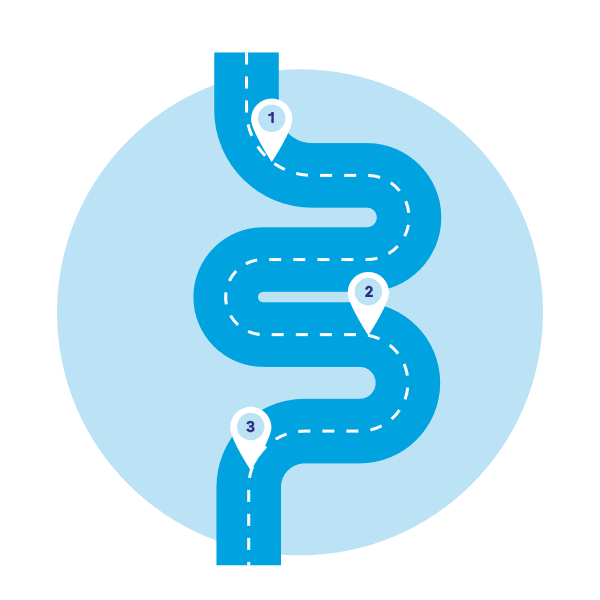
There’s no denying, enterprise selling entails many formidable challenges. Here are just a few.
First, enterprise sales cycles are nearly always lengthy, from many months to oftentimes more than a year.
Second, the discovery process is far more complicated and involved than that required for a smaller, transactional sale.
Third, the requirement for social proof and projected ROI is far more important in enterprise selling than in transactional selling.
Fourth, things change! Over the course of a lengthy enterprise sales cycle, the customer’s business, its decision-makers, the external business environment, your products, your pricing, your sales team and the positioning of your competitors may change, all with the potential to impact the outcome of your enterprise sales efforts.
Fifth, enterprise selling almost always means multiple decision-makers and often the very real and active presence of office politics. It can be challenging to identify key influencers from the outside and then win their support. Sixth, once you do identify the right players, you may have just one shot to secure their interest, their support, and their business.

How do I succeed in enterprise sales?
While there are many factors to successful enterprise selling, there are 4 top principles for you to consider. In simple terms, those 4 principles are: know your customers, know your products, know your solutions and build long-term relationships.
To know your customers, you need to research the marketplace and your customer, of course. Even more importantly, you need to experience your customers’ products and services. All the reading and research in the world won’t match actually experiencing your customers’ products and services.

To know your products requires focus and effort. It’s imperative that you understand the features and functionality of the products you’re selling. This can be especially challenging as the product you’re selling may evolve over the course of the sales cycle. Don’t rely on others in your organization to explain the value of your product to your customer. You must have this knowledge and the ability to expertly explain the features, benefits, and unique advantages of your product.
Beyond knowing your products, you must know how your products can become solutions to your customers’ needs. It’s not up to your customer to connect the dots for you. You need to be able to articulate how your product delivers solutions to real business problems. Often this means being able to provide relevant case studies and success stories at the right time and in the right words.
Ultimately, successful enterprise selling requires the building and nurturing of strong, long-term relationships.

What is enterprise sales enablement?
In a nutshell, enterprise sales enablement means equipping sellers with the right resources to shorten the sales cycle, increase win rates, and sign bigger deals. Enterprise sales enablement, as a function, evolved in response to the evolution of the enterprise buyer. With a wealth of information available online, enterprise buyers are in more control of the buying process than ever before. In many cases, enterprise buyers can be more than halfway through their journey before they reach out to a seller.
What does this mean? It means that enterprise sellers must take the initiative to reach out to enterprise buyers, winning the buyers’ attention much earlier in their journey. This is a task typically associated with marketing. So, sellers need to think more like marketers, and marketers need to think more like sellers – about the day-to-day experiences of enterprise buying and selling.
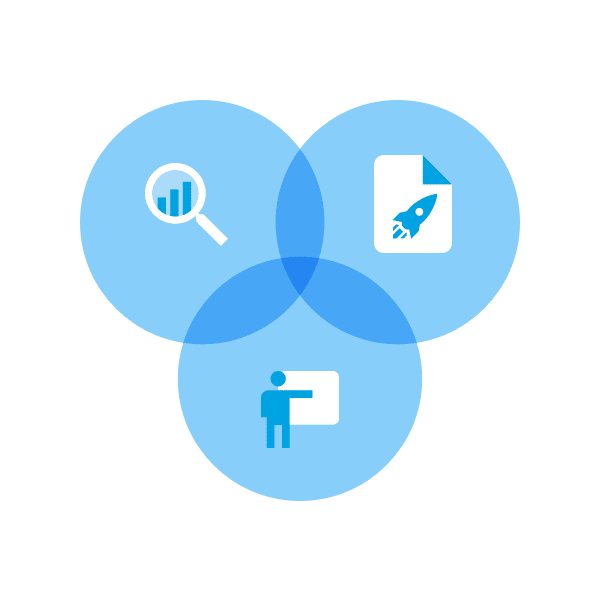
Enterprise sales enablement is providing customer insights, content and coaching to your sales team throughout the enterprise selling process. Sales enablement is the process of providing your sales team with the resources they need to close more deals. These resources may include content, tools, knowledge, and information to effectively sell your product or service to customers.
Ultimately, the goal of sales enablement is to align the interdependent elements of sales, marketing, customer support, product management, brand management, legal, and human resources to boost seller productivity and improve the buyer experience. In a nutshell, sales enablement strategy is to provide salespeople with what they need to successfully engage the buyer throughout the buying process.

What is the importance of enterprise sales enablement?
Sales enablement plays a critical role in developing your enterprise sales organization beyond a few top achievers. Enterprise sales enablement provides all salespeople with the best practices, knowledge, tools, and resources required to be successful.
An overwhelming majority of organizations experience significant growth in their sales as a result of enterprise sales enablement. What’s more so, organizations with sales enablement achieve a far better win rate on their forecasted deals, compared to businesses without it.
The importance of sales enablement comes down to the fact that salespeople are more likely to succeed in closing deals if they have the necessary tools, knowledge, practice, and resources.
What are the components of sales enablement software?
The most important sales enablement software components include content management, content creation, customer engagement, presentation management, sales onboarding/training/coaching and sales communication. All of these components are critical to the optimal functioning of sales enablement software.
What are the benefits of enterprise sales enablement software?
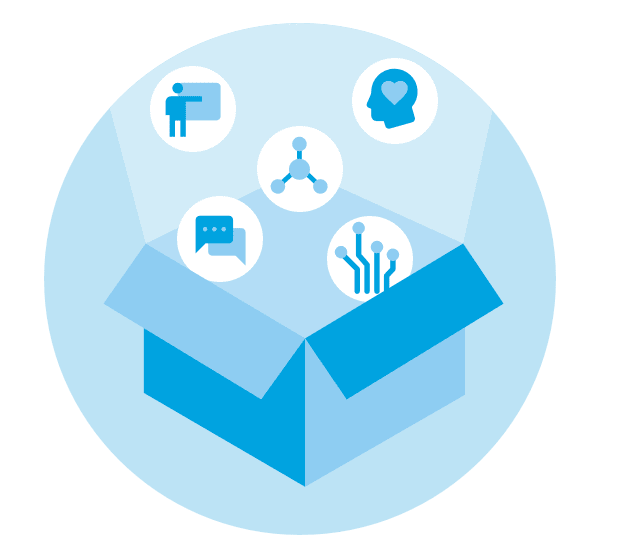
Adoption of the right sales enablement software platform delivers many benefits. The first one is improvement in the orchestration of the sales process through technology. The second one is improved communication in marketing and sales through quality content. The third one is talent management through onboarding/coaching/evaluating employees. The fourth pillar is enhanced customer satisfaction, due to an optimized buyer’s journey. The fifth primary benefit of adopting an enterprise sales enablement platform is improved collaboration and process efficiencies.

Who owns sales enablement?
Sales enablement is owned jointly by Sales and Marketing. There are six simple organizational rules that can help you structure your program.
First, both Sales and Marketing must contribute to the formation of a dedicated sales enterprise team. The creation of a dedicated team, with a single purpose and shared goals, is key to the success of enterprise sales enablement.
Second, Sales and Marketing need to collaborate on what resources are needed for the program. Common resource requirements include content, conversation guides and sales training.
Third, Marketing is most often responsible for creating the vast majority of this information.
Fourth, Marketing should bear most of the responsibility for training the sales organization.
Fifth, Sales operations play a crucial role in operationalizing the information sales receives as part of the sales enablement program.
And sixth, it’s up to sales management to make sure the sales enablement program is being put into practice. When it comes to sales enablement, Marketing is a better creator and Sales is a better enforcer.

What is Showpad’s enterprise sales enablement software solution?
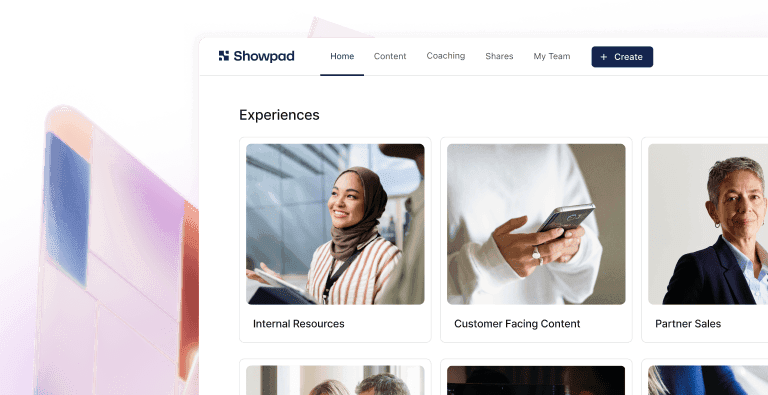
Showpad is a comprehensive sales enablement technology that provides every customer-facing team with the required skills, knowledge, content and tools to have differentiating, impactful conversations with buyers and customers.
What are the advantages of Showpad’s enterprise sales enablement software?
Simply stated, Showpad’s sales enablement technology makes enterprise selling easier. The Showpad platform streamlines onboarding, training, and coaching, helping get new hires selling quickly. With scalable training materials available on any device, new hires can access what they need anywhere, any time. Showpad can reduce the onboarding time for a new salesperson by 25%.
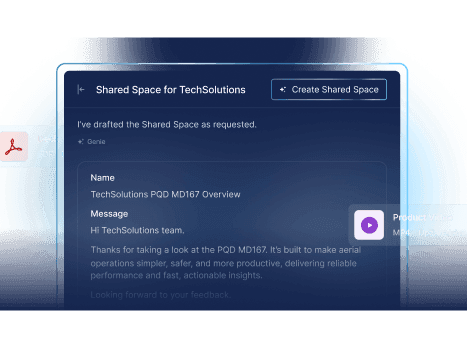
Showpad puts the right information at every salesperson’s fingertips. The platform saves sales reps time by making relevant content easy to find, personalize and share on any device. Your sales team will get more effective, too: with Showpad, sales reps have the training, content, and support they need to exceed buyer expectations every time. Showpad can lead to an increase in enterprise sales of 10% or more.
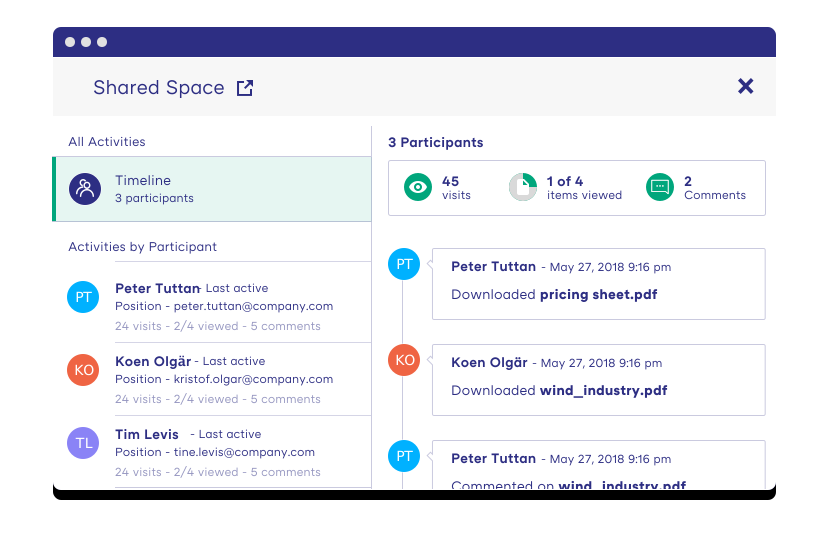
Showpad helps sales and marketing teams collaborate efficiently to produce the content buyers need. Our platform centralizes all sales collateral so it’s easy to access, update and share materials. Powerful analytics identify the most impactful content so marketing can focus on producing only the best, most relevant content for sales. This can result in a 25% increase in productivity.
Forrester analyzed the costs associated with Showpad (including licensing, training and implementation) against the platform’s benefits over the course of three years. They found the platform shows a return on investment of 516%.

The Showpad Sales Enablement Platform is ideally placed to guide companies through the challenges they face by leveraging a unified platform that combines content and coaching. Digitization of content and continuous access to training will help companies scale quickly while providing experiences that delight their customers and win business.
With Showpad’s Sales Enablement solution, marketers can centralize, organize, and distribute content intuitively, ensuring all content is consistent and compliant with messaging and branding guidelines. Salespeople and distributors can quickly pull up the right information at the right time to present or share with prospects. All content is updated in real-time, so your sales team always has access to the latest information in the field, reducing errors and miscommunication.

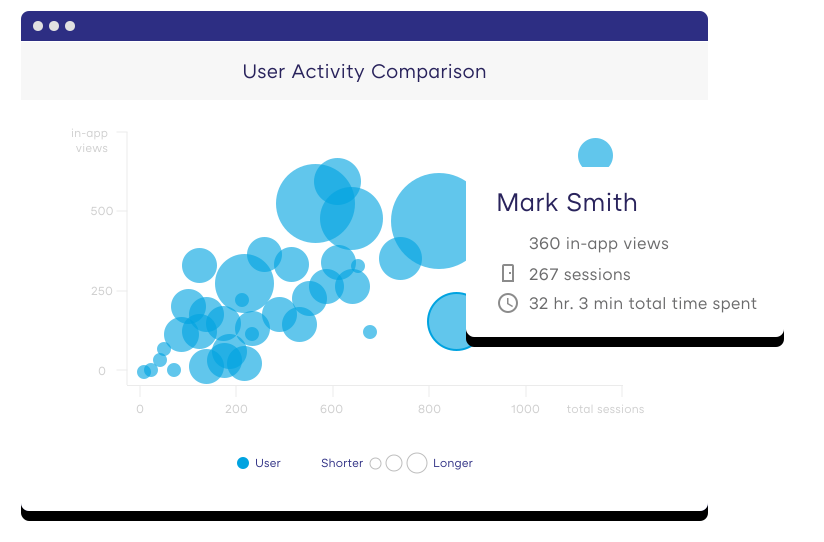
Showpad also offers security and content control features that allow marketers to lock down confidential information and ensure presentations meet requirements, such as the mandatory inclusion of potential harmful effects and usage instructions. Through Showpad’s in-depth analytics dashboard, marketers can see how their content was used by salespeople, and engaged with by prospects, in order to optimize content creation. Sales managers gain insight into top performers’ best practices so they can achieve maximum results.
Showpad supports your revenue teams so they can be prepared better than ever before, create engaging experiences your buyers will always remember, and make your company generate more revenue.
Want to learn more about Showpad?
Contact us for a personal assessment of your enablement journey.