







Enterprise Sales Team Structure
The well-regarded book Aligning Strategy and Sales by Frank V. Cespedes of The Harvard Business School describes 4 general types of enterprise sales organization structures. The 4 general sales organization structures, as he defines them, are based upon:
1) geography/territory
2) product/service line
3) customer/account size
4) industry/vertical market segment
What are the Top 4 Enterprise Sales Organization Structures?
Here is a short description of each type of enterprise sales organization structure.
Geography/Territory Structure
Organizing your enterprise sales team by geography or territory allows each salesperson to develop familiarity with a specific geographic location. They can build rapport with local businesses, get to know regional competitors, and track target accounts.
Product/Service Line Structure
If your organization sells several different products or services, it can help to align your enterprise sales team around those products and services. Similar to geographical expertise, it allows your enterprise sales people to become the expert on a specific product you sell, thereby better able to communicate its value and use case for your individual clients.
Customer/Account Size Structure
Organizing your enterprise sales organization by account size is another popular structure. The skills an enterprise sales rep needs to sell to a $100 million enterprise are different from those to sell to a $1 billion enterprise, and organizing your enterprise sales team accordingly can be effective.
Your enterprise clients of different sizes will likely have different goals, will ask different questions, and have very different budgets. By allowing your enterprise sales reps to become familiar with the intricacies of these accounts, you’ll better meet the needs of the customer and your business.
Industry/Vertical Structure
Different industries will use your product/service in different ways. Make sure your enterprise sales team is well-versed in how to position your offering to these various verticals by organizing your enterprise sales team accordingly.

What is enterprise sales enablement?
Enterprise sales enablement means equipping sellers with the right resources to shorten the sales cycle, increase win rates, and sign bigger deals. Enterprise sales enablement, as a function, evolved in response to the evolution of the enterprise buyer. With a wealth of information available online, enterprise buyers are in more control of the buying process than ever before. In many cases, enterprise buyers can be more than halfway through their journey before they reach out to a seller.
What does this mean? It means that enterprise sellers must take the initiative to reach out to enterprise buyers, winning the buyers’ attention much earlier in their journey. This is a task typically associated with marketing. So, sellers need to think more like marketers, and marketers need to think more like sellers – about the day-to-day experiences of enterprise buying and selling.
Enterprise sales enablement is providing customer insights, content and coaching to your sales team throughout the enterprise selling process. Sales enablement is the process of providing your sales team with the resources they need to close more deals. These resources may include content, tools, knowledge, and information to effectively sell your product or service to customers.
Ultimately, the goal of sales enablement is to align the interdependent elements of sales, marketing, customer support, product management, brand management, legal, and human resources to boost seller productivity and improve the buyer experience. In a nutshell, sales enablement strategy is to provide salespeople with what they need to successfully engage the buyer throughout the buying process.

How can sales enablement help an enterprise sales organization?
Sales enablement provides all enterprise salespeople with the best practices, knowledge, tools, and resources required to be successful.
Adoption of the right enterprise sales enablement software platform delivers many benefits.
- First is improvement in the orchestration of the sales process through technology.
- Second is improved communication in marketing and sales through quality content.
- Third is talent management through onboarding/coaching/evaluating employees.
- Fourth is enhanced customer satisfaction, due to an optimized buyer’s journey.
- Fifth primary benefit of adopting an enterprise sales enablement platform is improved collaboration and process efficiencies.
An overwhelming majority of organizations experience significant growth in their sales as a result of enterprise sales enablement. What’s more, organizations with sales enablement achieve a far better win rate on their forecasted deals, compared to businesses without it.
The importance of sales enablement comes down to the fact that salespeople are more likely to succeed in closing deals if they have the necessary tools, knowledge, practice, and resources.
How can Showpad Make Your Enterprise Sales Organization Stronger?
Showpad is a global leader in revenue enablement technology, providing teams with a modern selling solution for maximizing hybrid sales. In more than 50 countries, customers rely on the Showpad platform to empower their teams to be at their best. Showpad has been named a Strong Performer by Forrester’s Wave for Sales Content Solutions, recognized as a top 10 software company by G2, and listed in Deloitte’s Fast 50 and Inc Magazine’s 2019 Best Workplaces.
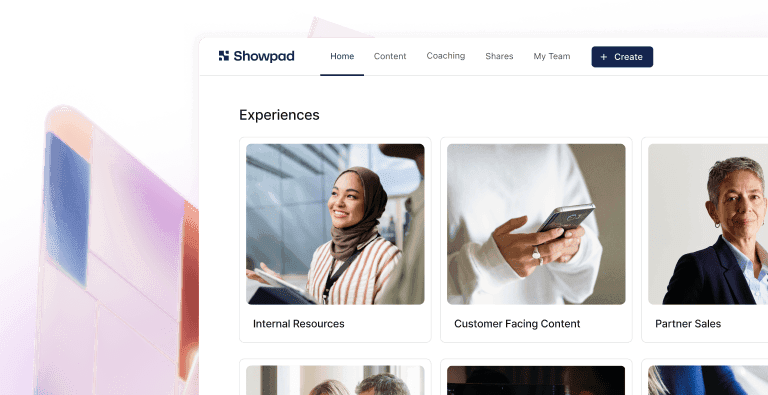
Showpad will support your current needs and future growth because we help prepare sellers by making it easy to find the latest on-brand content in a central location for every opportunity. Showpad also supports sales onboarding, training, and coaching to maximize teams’ productivity, increase active selling time, and accelerate sales rep onboarding time.
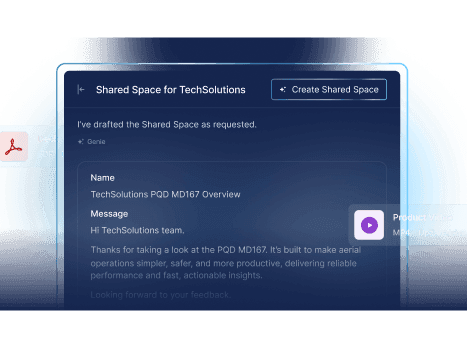
- Sellers can more effectively engage buyers by leveraging Showpad to more efficiently prepare for and personalize sales presentations. Sellers can easily share the most relevant content with buyers from any device and collaborate with all stakeholders in one branded location
- By tracking their buyer’s level of interest through Showpad insights, sellers can optimize their performance, shorten their sales cycles, and have increased visibility into buyer intentions
- Sales leaders can identify and replicate their top sellers’ behavior to scale success, decreasing the overall long-term cost of sales
- Marketing can leverage our bottom of funnel insights and buyer insights helping marketing identify the content and experiences that engage buyers and drive revenue
- Administrators can support content management and distribution of content as well as sales training efforts at scale from one unified platform, decreasing the administrative burden of launching and maintaining a Sales Enablement program
Want to learn more about Showpad?
Contact us for a personal assessment of your enablement journey.