







Professional Sales Training
Professional sales training is defined as equipping your sales people with the product knowledge, selling skills, self-confidence and positive mindset to successfully sell and close profitable deals. Professional sales training programs offer valuable templates, proven sales techniques and even sales pitch starts, giving your team the foundation they need to succeed.. Effective professional sales training has a direct correlation to business results. In fact, McKinsey confirms that strong professional sales training directly relates to strong sales performance. Because of its impact, it’s important to choose the best professional sales training for your organization.The quality of professional training you provide your new sales hires will shape their future success. To implement a great professional sales training program, here are seven important components to consider:
1. Essential professional sales skills
Even for experienced sales reps, professional training presents an opportunity to refresh and refine basic sales skills. Here are a few examples of skills to revisit with your reps:
- Finding prospects
- Writing cold emails
- Making a cold call
- Giving a sales demonstration
- Drawing up a proposal
- Closing the deal
- Onboarding clients after a deal
To teach these skills most effectively, use demonstrations and role-playing exercises. Be sure to include video examples. By catering to different styles of learning, your sales representatives will be better able to internalize and apply what they’ve learned. As part of the professional training process, you can even ask your trainees to shadow real-life phone calls and meetings. Through these real-life experiences, your top-performing sales peoples can model their sales skills to new hires.
2. The customer experience
Genuine empathy for customers is one of the most important traits any sales representative can cultivate. To that end, your sales training program should include modules for helping new representatives to understand all facets of the customer experience. The most successful sales representatives empathize with what customers are feeling at all stages of the sales process, from initial contact until a deal is closed.
Don’t just review buyer personas with your team, create exercises based on real-world situations that elicit empathy for your target customers. Have new sales representatives role-play from the perspective of a customer so that they can put themselves in those shoes. Introduce new hires to your existing customers’ perspectives by showing them a video, or even setting up a meeting between new hires and a valued customer.
If there are pain points that are particularly essential for your company’s Unique Selling Proposition, devise an exercise that will allow your sales representatives to experience that pain point on a larger scale. If your product allows retail employees to stock clothing more efficiently, for example, make your sales representatives organize merchandise the old-fashioned way.
3. Your products and market
Your professional sales training program needs to include detailed information about your products and your market. It’s important to emphasize your Unique Selling Proposition throughout the professional sales training program, so that your sales representatives can effectively answer the question: M “what makes you different from your competitors?”
As part of product training, allow your sales trainees to use the products themselves. You can invite software developers and product engineers to come in and talk to new representatives. They’re familiar with the little-known product features that can help representatives make a sale. New sales representatives should become familiar not only with your products and buyer personas, but also your marketing content library. This will allow your sales team to connect prospective customers with the right resources during the sales process.
In introducing trainees to new products, it can be very helpful for them to observe a sales demonstration from one of your best experiences sales representatives. Later on, ask them to perform a mock sales pitch.
4. Your sales process
Teaching new hires about your individual sales process is critical. If a new hire has previous sales experience, it’s likely that they’re using processes that differ from your own. Make sure everyone leaves training with a comprehensive understanding of your unique processes, including:
- Preferred methods of lead generation
- Your method for qualifying prospects
- How you define different stages of the sales funnel
- Guiding prospects through the sales process
- Creating a proposal
- Closing a deal
- Up-selling and cross-selling
- Delivering a great customer experience once the deal is signed
To teach your methods effectively, it can be helpful to review actual case studies in detail. Role-playing exercises are also a helpful tool. For example, trainees can practice prospect qualification by qualifying an example prospect. You can even use past cases to create a sense of realism.
5. CRM training
Knowing how to use the CRM system effectively is a critical skill for modern sales representatives. Provide CRM training that is specific to your company’s processes and highlights any customizations you’ve made to the software. Although training materials provided by the CRM vendor can be a helpful starting point, your trainees will greatly benefit from more specialized training.
Most people learn software best by doing, so provide trainees with multiple opportunities to use the software firsthand. They should learn how to enter new entries into the CRM, use the search function, and update information on existing accounts. To add more interest to CRM training, consider turning it into a scavenger hunt. Breaking your trainees up into groups, ask them to locate certain pieces of information from the CRM. You can even offer a prize to the winning team.
6. Team-building exercises
As your new hires learn the basics, include activities that will help them bond together as a team. Group exercises should be incorporated throughout the training. Ideally, training instructors should shake up the composition of the groups so that people can get to know as many of their new co-workers as possible.
While the bulk of sales training will be devoted to business, consider incorporating the occasional fun group activity or outing.
7. Assessment
The training process should incorporate regular assessment, including both self-assessment and outside evaluation. Assessment is useful for customizing training to address trainees’ individual strengths and weaknesses, and for measuring the effectiveness of training modules.
To measure a trainee’s growth during the sales training program, provide them with the same assessment at the beginning, middle, and end of the training period. One such example is for the sales representative to provide a mock product demonstration. Consider the results as both a means to evaluate representatives’ skills and a learning opportunity.
Don’t overlook self-assessment
Not only is self-assessment easy to administer, but it is also useful for inculcating habits of self-awareness in your sales representatives. Ask new trainees to use the same self-evaluation tools as you provide to established sales representatives so they become familiarized with your processes.

Why Choose the Best Sales Training Program?
Choosing and executing the best sales training for your organization can result in higher opportunity win rates, claiming top value through profitable pricing and sales volume, and a boost in abilities to both fill pipelines and grow accounts.
The right sales training will make your sales team more effective and efficient in pursuing their goals. Your sales people will come to understand how to stand out from the rest, how to attract customers, and how to build support for your business initiatives. Your sales people will gain the skills to locate new customers and get great results. The best sales training programs can help your team better prepare and successfully execute your sales plan. When choosing a sales training program, you will want to look for a range of resources designed to help your sales people learn the strategies that turn prospects into customers.

What is Sales Enablement?
In a nutshell, sales enablement means equipping sales people with the right resources to shorten the sales cycle, increase win rates, and sign bigger deals. Sales enablement, as a function, evolved in response to the evolution of the B2B buyer. With a wealth of information available online, buyers are in more control of the buying process than ever before. In many cases, buyers can be more than halfway through their journey before they reach out to a seller.
What does this mean? It means that sellers must take the initiative to reach out to enterprise buyers, winning the buyers’ attention much earlier in their journey. This is a task typically associated with marketing. So, sellers need to think more like marketers, and marketers need to think more like sellers – about the day-to-day experiences of enterprise buying and selling. Strong sales training, a key function of sales enablement, can ensure your sellers think like marketers.
The essence of sales enablement is ongoing sales training and coaching. Because sales enablement is providing customer insights, content and coaching to your sales team throughout the enterprise selling process. Sales enablement is the process of providing your sales team with the resources they need to close more deals. These resources may include content, tools, knowledge, and information to effectively sell your product or service to customers.
Ultimately, the goal of sales enablement is to align the interdependent elements of sales, marketing, customer support, product management, brand management, legal, and human resources to boost seller productivity and improve the buyer experience. In a nutshell, sales enablement strategy is to provide salespeople with what they need to successfully engage the buyer throughout the buying process.
What are the Advantages of Showpad’s Sales Enablement Software?
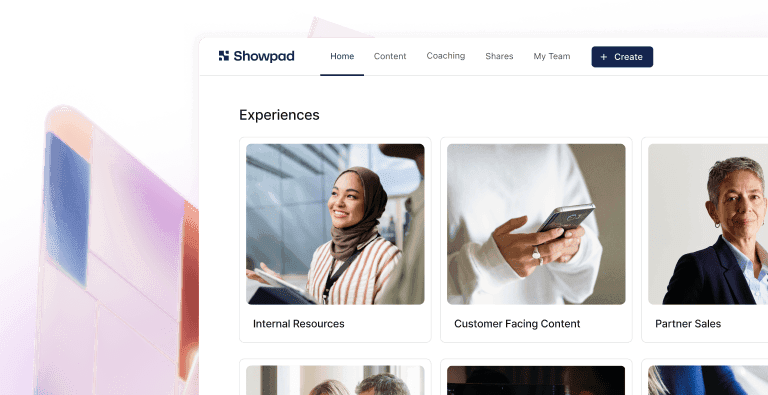
Simply stated, Showpad’s sales enablement technology makes selling easier. The Showpad platform streamlines onboarding, training, and coaching, helping get new hires selling quickly. With scalable training materials available on any device, new hires can access what they need anywhere, any time. Showpad can reduce the onboarding time for a new salesperson by 25%.
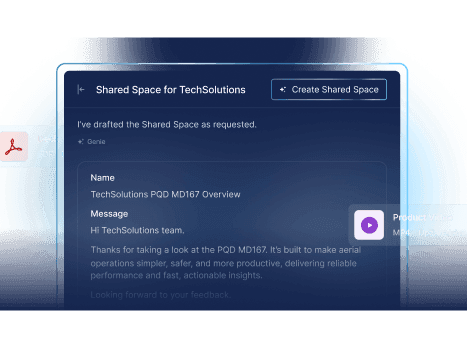
Showpad puts the right information at every salesperson’s fingertips. The platform saves sales reps time by making relevant content easy to find, personalize and share on any device. Your sales team will get more effective, too: with Showpad, sales reps have the training, content, and support they need to exceed buyer expectations every time. Showpad can lead to an increase in enterprise sales of 10% or more.
Showpad helps sales and marketing teams collaborate efficiently to produce the content buyers need. Our platform centralizes all sales collateral so it’s easy to access, update and share materials. Powerful analytics identify the most impactful content so marketing can focus on producing only the best, most relevant content for sales. This can result in a 25% increase in productivity.
Forrester analyzed the costs associated with Showpad (including licensing, training and implementation) against the platform’s benefits over the course of three years. They found the platform shows a return on investment of 516%.
The Showpad Sales Enablement Platform is ideally placed to guide companies through the challenges they face by leveraging a unified platform that combines content and coaching. Digitization of content and continuous access to training will help companies scale quickly while providing experiences that delight their customers and win business.
With Showpad’s Sales Enablement solution, marketers can centralize, organize, and distribute content intuitively, ensuring all content is consistent and compliant with messaging and branding guidelines. Salespeople and distributors can quickly pull up the right information at the right time to present or share with prospects. All content is updated in real-time, so your sales team always has access to the latest information in the field, reducing errors and miscommunication.
Showpad also offers security and content control features that allow marketers to lock down confidential information and ensure presentations meet requirements, such as the mandatory inclusion of potential harmful effects and usage instructions. Through Showpad’s in-depth analytics dashboard, marketers can see how their content was used by salespeople, and engaged with by prospects, in order to optimize content creation. Sales managers gain insight into top performers’ best practices so they can achieve maximum results.
Showpad supports your revenue teams so they can be prepared better than ever before, create engaging experiences your buyers will always remember, and make your company generate more revenue.
Want to learn more about Showpad?
Contact us for a personal assessment of your enablement journey.