









Behind every revenue target hit, every deal closed, every product that reaches the market, there is a seller who was ready when it counted. Building that readiness is not a training event. It is a continuous discipline, and the platform you choose to support it shapes whether your teams walk into customer conversations prepared to win or struggling to catch up.
This guide evaluates fourteen sales readiness platforms for enterprise buyers: Showpad, Mindtickle, Allego, Seismic, Highspot, SalesHood, Outreach, Mediafly, Dock, and Gong, as well as Second Nature, Spekit, Deelan, and Pifini.ai. Because capabilities and packaging change frequently, the guide focuses on evaluation criteria and the right questions to ask each vendor rather than fixed rankings or numerical scores.
What is a sales readiness platform?
A sales readiness platform helps an organization establish whether customer-facing people are prepared to perform specific work. It typically combines learning, practice, feedback, assessment, certification, reinforcement, and measurement rather than treating training completion as the final outcome.
A conventional learning management system (LMS) is usually optimized to administer courses, enroll learners, record completion, and demonstrate compliance. Those are valuable functions, but they do not necessarily show whether a seller can conduct discovery, explain a differentiated proposition, handle an objection, deliver a product demonstration, or apply a methodology during a live opportunity.
It typically addresses four connected pillars:
- Onboarding: Preparing new hires, internal movers, and partners to perform defined responsibilities within an expected timeframe.
- Coaching: Giving sellers targeted feedback that improves specific knowledge, skills, and behaviors.
- Certification: Requiring evidence that a seller can meet an agreed standard, rather than merely complete training.
- Practice: Providing a safe environment in which sellers can rehearse conversations, presentations, and product demonstrations before applying them with buyers.
The strongest enterprise readiness platforms connect training to post-training work. They help teams move through a continuous sequence:
Learn → Practice → Certify → Reinforce → Engage → Measure
- Learn: Does the seller understand the relevant product, market, buyer, process, and message?
- Practice: Can the seller apply that knowledge in a realistic but controlled scenario?
- Certify: Has the seller produced evidence that meets the organization’s defined standard?
- Reinforce: Is knowledge retained and refreshed as products, markets, and messages change?
- Engage: Can the seller use the right behavior and material during actual buyer interactions?
- Measure: Is improved readiness associated with field adoption, execution quality, or business outcomes?
This sequence matters because readiness is not a one-time event. Product releases, regulatory changes, acquisitions, new competitors, and shifts in buying behavior can make a previously prepared field organization less ready.
The role of AI in sales readiness platforms
AI has changed how several core readiness functions are delivered, though the depth and governance of AI capabilities varies significantly across platforms.
In roleplay and practice, AI-generated buyers allow sellers to rehearse conversations repeatedly without requiring a manager or facilitator for every session. The quality of these experiences depends on scenario fidelity, persona controls, the ability to adapt to the seller rather than follow a rigid script, and how feedback is generated and explained.
In coaching, the traditional model requires a manager to watch a roleplay submission, score it manually, and write feedback, which creates a bottleneck when seller populations are large or managers are stretched. Automated coaching removes that dependency, allowing every roleplay submission to receive scored feedback without waiting for manager availability. This makes consistent coaching scalable across teams and geographies in a way that manual review alone cannot support.
In certification, AI-evaluated evidence is increasingly being incorporated alongside manager validation. Whether an automated score is appropriate for a formal certification decision depends on the stakes involved, the explainability of the score, and whether the platform provides a governed appeal or override process.
Not every platform in this guide applies AI equally across these functions. Some are built around AI as a core capability; others use it selectively or not at all. Buyers should require a live demonstration using their own scenarios, terminology, and rubrics rather than relying on feature listings alone.
How sales readiness fits within your existing technology stack
Traditional learning management systems were built to solve a compliance and administration problem: assign a course, track completion, record the result. That model works for regulatory training and onboarding paperwork, but it does not establish whether a seller can conduct discovery, handle an objection, deliver a product demonstration, or apply a methodology under pressure with a real buyer. Completion is not competence, and the gap between the two is where revenue is lost.
Sales readiness platforms emerged to close that gap. Where an LMS records that a seller finished a course, a readiness platform requires evidence that the seller can actually perform. That evidence comes through roleplay, rubric-based coaching, certification that goes beyond a quiz, and reinforcement that keeps skills current as products, competitors, and markets change.
Sales readiness itself sits within the broader discipline of sales enablement, which also covers content management, buyer engagement, methodology, analytics, and the operating processes that help revenue teams execute. A dedicated readiness platform may be part of an enablement suite or deployed alongside one, depending on the depth of readiness capability the enterprise requires.
Sales coaching software is frequently confused with a full readiness platform during procurement. Coaching tools cover observation, feedback, planning, and follow-up, and can sit inside a readiness platform, a conversation intelligence tool, a sales engagement platform, or outside software entirely. The distinction that matters is scope: a coaching tool may identify what happened in customer calls without administering onboarding, formal learning, certification, or recertification. Coaching is a function within readiness, not a substitute for it.
The procurement question is therefore not “readiness or enablement” but “does my current stack administer the full readiness lifecycle, including roleplay, certification, reinforcement, and measurement, or am I relying on tools that only cover part of it?” A point solution is the right answer when the gap is narrow. A broader platform is more appropriate when the enterprise needs common governance across learning, practice, certification, field execution, and measurement.
Best sales readiness platforms at a glance
There is no universal “best” sales readiness platform. The right choice depends on the primary readiness problem, the existing technology estate, the required evidence of competence, and where sellers work.
Showpad: Best for enterprises connecting governed enablement content with AI-guided roleplay, scalable coaching, certification, and field execution in a single enablement environment.
Mindtickle: Best for organizations seeking a readiness-centered program spanning onboarding, AI-assisted practice, coaching, and measurement across sizable revenue teams.
Allego: Best for distributed sales teams prioritizing video-based learning, peer knowledge sharing, and AI-assisted practice and coaching.
Seismic: Best for enterprises that want readiness capabilities closely connected to a broad content-enablement environment.
Highspot: Best for organizations seeking to combine sales content, guidance, training, coaching, and adoption workflows.
SalesHood: Best for collaborative enablement programs built around learning, coaching, peer participation, and reinforcement.
Outreach: Best for revenue organizations that want coaching and execution insights close to sales-engagement workflows.
Mediafly: Best for enterprises connecting enablement, content, buyer engagement, and value-oriented selling.
Dock: Best for revenue teams that need buyer-facing workspaces and deal collaboration more than formal readiness administration.
Gong: Best for organizations using real customer interactions as the foundation for conversation intelligence and coaching.
Second Nature: Best for teams whose primary requirement is scalable, AI-led conversational role-play without a broader curriculum platform.
Spekit: Best for teams prioritizing in-workflow reinforcement and contextual guidance over a full readiness suite.
Deelan: Best for buyers exploring a specialist AI practice option, subject to detailed enterprise validation.
Pifini.ai: Best for buyers considering focused AI simulation and coaching, with due diligence on platform breadth and operations.
Sales readiness platform comparison
The table reflects each platform’s core orientation and the capabilities that buyers should investigate. Where public evidence is limited, the cell says so rather than treating a missing claim as proof that a capability is absent.
| Platform | AI Role-Play & Practice | AI Coaching Feedback | Onboarding Tools | Certification | Mobile/Offline | Industry Focus |
|---|---|---|---|---|---|---|
| Showpad | AI-guided practice and realistic role-play scenarios are positioned to let sellers rehearse before buyer interactions | Automated coaching feedback can extend practice review beyond available manager capacity | Supports structured learning and readiness programs connected to enablement content | Supports assessment and certification workflows; validate how AI-evaluated practice contributes to certification | Mobile-first field access and offline coaching access are relevant strengths; verify which content, practice, and synchronization functions work offline | Broad enterprise use, with particular relevance for complex-product and field-selling organizations |
| Mindtickle | Role-play and practice sit within a broader readiness model; confirm supported modalities and scenario controls | AI-assisted feedback and readiness analysis should be tested against buyer-defined rubrics | Strong readiness orientation for onboarding, learning paths, reinforcement, and skills development | Certification is a central use case; verify evidence levels, manager approval, and recertification controls | Mobile access is expected; verify complete offline behavior by activity | Broad B2B readiness, including regulated or complex programs where rigorous administration matters |
| Allego | Practice commonly centers on video, messaging, and seller-submitted exercises; confirm current AI simulation options | Feedback may combine AI assistance, manager review, and peer coaching; validate scoring transparency | Supports learning, onboarding, reinforcement, and distributed knowledge sharing | Supports assessments and certification-oriented programs; verify rigor and approval workflow | Mobile delivery is central to its distributed-team orientation; verify offline creation, playback, submission, and sync | Broad B2B, especially distributed and mobile sales teams |
| Seismic | Practice and role-play may be available within its learning and coaching environment; validate current modalities | AI-assisted coaching should be evaluated alongside Seismic’s wider enablement and content capabilities | Learning and readiness can be connected with content, guidance, and field activity | Supports readiness and certification use cases; verify configuration and evidence requirements | Mobile content access is relevant; verify which readiness activities function fully offline | Large enterprises, financial services, life sciences, technology, and other content-intensive sectors |
| Highspot | Training, practice, and coaching can be organized around plays and initiatives; validate current AI role-play depth | AI may assist guidance and coaching workflows; request a demonstration of feedback criteria and manager controls | Supports onboarding, training, plays, and ongoing reinforcement | Supports assessment and program-completion workflows; verify higher-level demonstration certification | Mobile access is supported in the broader platform context; verify offline readiness activities separately | Broad enterprise B2B, particularly organizations consolidating content and enablement workflows |
| SalesHood | Supports practice, pitch activity, and peer or manager participation; confirm current AI role-play modalities | Coaching feedback may blend automation with manager and peer input; validate rubric customization | Collaborative learning and onboarding are part of its core enablement orientation | Supports assessment and certification programs; confirm governance and recertification depth | Mobile availability should be confirmed alongside offline submission and synchronization behavior | Broad B2B, including high-growth and distributed enablement teams |
| Outreach | AI practice is not its primary orientation; verify any current role-play functionality rather than assuming parity with readiness suites | Coaching and insight are more closely associated with sales execution and interaction data | May support guided adoption and reinforcement around workflows, but it is not primarily an onboarding LMS | Formal certification capability is not clearly central; validate if required | Mobile execution may be supported; verify offline learning and coaching separately | B2B sales organizations centered on prospecting, sequencing, and revenue execution |
| Mediafly | Practice may sit within a wider enablement environment; confirm current AI role-play and simulation depth | AI coaching capability should be assessed separately from content, analytics, and value-selling functions | Can support enablement and onboarding through content, learning, and guided workflows; verify current packaging | Assessment and certification scope should be validated against the required evidence level | Mobile access is relevant for field enablement; verify offline readiness and synchronization | Enterprise B2B, especially complex sales and value-selling environments |
| Dock | Formal AI role-play is not central to its buyer-workspace orientation | AI coaching feedback is not clearly a core capability; verify recent additions if this is required | Can structure customer-facing processes and internal handoffs, but is not primarily a readiness curriculum platform | Formal readiness certification is not a core documented orientation | Verify mobile experience and offline behavior; buyer workspaces typically depend on connected collaboration | B2B sales, onboarding, and customer-success teams using shared digital workspaces |
| Gong | Practice is secondary to analysis of real interactions; verify any current simulation or role-play capability | AI-supported conversation analysis can inform coaching using recorded customer interactions | Can reinforce onboarding with examples and interaction evidence, but is not primarily a learning-management system | Formal certification workflows should be validated if required | Mobile access may support interaction workflows; verify offline learning and coaching behavior | Conversation-intensive B2B revenue teams |
| Second Nature | Core orientation is AI-led conversational simulation and role-play | AI feedback is central; buyers should test scoring validity, explainability, and adaptation to their methodology | Can support onboarding through repeatable simulations, but broader curriculum administration should be evaluated | Simulation results may contribute to readiness decisions; verify formal certification governance and auditability | Verify mobile support and whether any simulations can operate without a network connection | Conversation-heavy sales and service environments |
| Spekit | Formal AI role-play is not clearly central to its in-workflow enablement orientation | AI-assisted knowledge delivery may support performance, but buyers should verify structured coaching feedback | Stronger fit for contextual onboarding and reinforcement inside work applications than for cohort-based academies | Formal skills certification should be validated; completion tracking is not equivalent to demonstrated competence | Access is designed around the flow of work; verify mobile and offline coverage by integration | SaaS and other teams prioritizing embedded adoption, process change, and just-in-time guidance |
| Deelan | Positioned as a specialist option for AI practice; buyers should validate modalities, persona controls, and scenario administration | Validate what feedback measures, how scores are calibrated, and whether managers can override results | Publicly documented onboarding breadth is limited; verify learning paths, assessments, and administration | Formal certification evidence is not sufficiently documented for this comparison; verify directly | Mobile and offline behavior are not sufficiently documented; verify directly | Industry specialization is not sufficiently documented; evaluate against the buyer’s own use case |
| Pifini.ai | Appears oriented toward AI-enabled simulation or practice; validate supported channels and scenario fidelity | Buyers should test feedback criteria, explainability, bias controls, and manager governance | Broader onboarding functionality is not sufficiently documented for this comparison | Certification workflow and auditability are not sufficiently documented; verify directly | Mobile and offline behavior are not sufficiently documented; verify directly | Industry specialization is not sufficiently documented; evaluate directly |
How to read the table: Mobile and offline are not interchangeable. A mobile application can still require a continuous connection. Ask every vendor which content can be downloaded; whether video practice can be recorded and submitted offline; whether coaching comments, assessments, and certifications are accessible offline; how updates and permissions are reconciled; whether data is encrypted on the device; what happens when content expires; and how conflicts, failed uploads, and learning records synchronize after reconnection.
How we evaluated the platforms
This is a capability-based comparison rather than an unsupported ranking. Evaluation committees should weigh the following dimensions according to risk, selling motion, workforce distribution, and the evidence of competence the business actually requires.
Onboarding depth
Examine:
- Whether onboarding supports roles, business units, geographies, channels, and prior experience—not just one global curriculum.
- Whether prerequisites, branching paths, deadlines, cohorts, assignments, and exceptions can be administered at scale.
- Whether managers can see progress, intervene, and approve readiness.
- Whether onboarding includes knowledge, practice, observation, and field validation.
- How quickly administrators can update learning when messaging or products change.
- Whether partner, franchise, contractor, and external audiences can be governed separately.
- Whether the platform measures only time to completion or also time to an agreed performance standard.
- How learner records migrate when employees change roles, teams, or regions.
Coaching and feedback
Ask:
- What evidence can trigger coaching: practice submissions, assessments, call recordings, activity data, manager observation, or business results?
- Can managers use standard rubrics while adding contextual judgment?
- Can feedback be written, audio, video, timestamped, or attached to specific moments?
- Can the system distinguish a knowledge gap from a behavioral, process, or execution gap?
- Can enablement teams inspect coaching quality and consistency across managers?
- Are coaching plans, actions, follow-ups, and outcomes visible over time?
- How does the system prevent automated feedback from being mistaken for validated managerial judgment?
- Can sellers challenge or request review of an automated score?
Certification rigor
“Certification” can mean anything from viewing a presentation to passing a manager-reviewed simulation. Procurement teams should define the evidence required before evaluating product checkboxes.
| Certification level | Evidence of readiness |
|---|---|
| 1. Completion | The learner opened, attended, or completed assigned material |
| 2. Knowledge | The learner passed a quiz or assessment of recall and understanding |
| 3. Demonstration | The learner performed a pitch, role-play, demonstration, or other observable task |
| 4. Manager validation | An accountable manager reviewed the evidence and approved readiness |
| 5. Field validation | Performance was observed or evidenced in genuine customer-facing work |
| 6. Recertification | Readiness was reassessed after a defined period, material change, or performance trigger |
Match the certification level to the business need. Completion may be sufficient for low-risk awareness training, while a regulated product launch or complex demonstration may require manager approval and periodic recertification. Buyers should also inspect rubric versioning, assessor permissions, appeals, audit history, exemptions, and expiration controls.
Realistic practice
Scenario variation should cover buyer role, industry, company size, stage, product, objection, competitor, language, sentiment, and desired outcome. A useful platform should allow the enterprise to change more than a character name while preserving governance over approved messaging.
For AI role-play, evaluate:
- Text, audio, and video modality support.
- Latency and conversational turn-taking.
- Whether the simulation adapts to the seller rather than following a rigid script.
- Persona, language, accent, emotion, and difficulty controls.
- Scenario authoring, approval, versioning, and reuse.
- Rubric design and weighting.
- Whether feedback cites observable evidence.
- Repeatability of scores across equivalent performances.
- Manager review, override, and appeal workflows.
- Accessibility and accommodation options.
- Storage, retention, consent, and permitted use of recordings.
- Whether customer data or confidential product information is used to train external models.
AI capability evaluation
AI is the dimension buyers most often compare and least often evaluate rigorously. Ask every vendor:
- Which modalities does role-play support: text, audio, and video?
- What does an AI coaching score actually measure, and can managers tune, review, or override it?
- Can AI evaluation count toward certification, and at which of the six certification levels?
- How does AI surface approved content at the moment of need, and how does it handle permissions, versions, and expired material?
- Does the platform support AI-generated courses, scenarios, questions, and assessments? What human-review and publishing controls apply?
- Does the platform score or predict rep readiness against pipeline or performance data? If so, what variables, assumptions, minimum data volumes, and validation methods are used?
- Can the vendor show the source evidence behind recommendations rather than generating an unexplained conclusion?
- What data is retained, where is it processed, and can enterprise data be excluded from model training?
- How are models monitored for drift, inconsistent scoring, or uneven performance across languages and user groups?
AI claims are unusually difficult to compare from marketing pages. Require a live demonstration using your own scenarios, terminology, scoring rubric, languages, and edge cases. Compare AI output with independent manager ratings before using automated scores in formal certification or employment decisions.
Enterprise operations
Consider:
- Delegated administration across business units, regions, brands, and partner channels.
- Role-based access, single sign-on, user provisioning, and deprovisioning.
- Content ownership, approval, localization, versioning, expiration, and archival.
- Regional hosting, privacy, retention, consent, legal hold, and audit requirements.
- Accessibility, supported languages, and right-to-left presentation where applicable.
- Mobile-device management and secure offline operation.
- Data export, APIs, warehouse connectivity, and identity resolution across systems.
- CRM, content, HR, learning, communications, and conversation-intelligence integrations.
- Sandbox, release management, change control, and implementation migration.
- Adoption analytics for sellers, managers, enablement teams, and administrators.
- Support for direct sellers, partners, service teams, and deskless or field employees.
- Reporting that separates correlation from demonstrated causal impact.
The best sales readiness platforms in 2026
Showpad
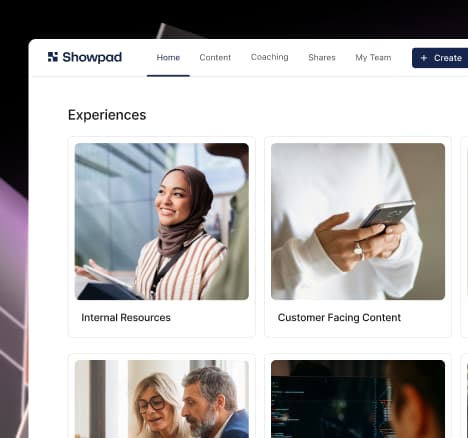
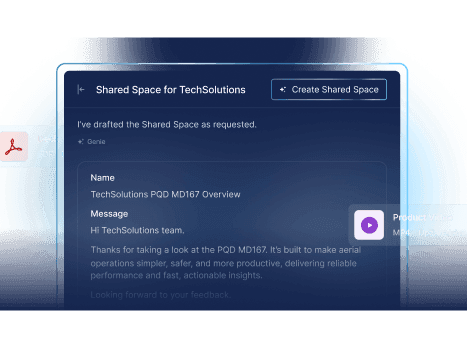
Showpad’s readiness spans structured learning through Courses & Paths, practice and assessment through Pitch AI and Roleplay AI, manager oversight and reporting, certifications, and accelerated content production with Authoring AI. Readiness is strongest when sellers learn and rehearse in the same governed environment that powers field execution via Pages and Experiences.
Strengths
- Field-oriented and complex-product readiness. Mobile-first access with offline support keeps sellers productive away from a reliable connection. Immersive, multimedia training through Pages and Experiences supports complex product storytelling and demonstration where classroom training falls short.
- AI-guided, scalable practice and feedback. Roleplay AI delivers interactive, two-way simulations that mirror buyer conversations with instant, objective feedback from Virtual Coach; rubric-based reviews extend coaching beyond manager capacity. PitchIQ supports one-way pitch certification to drive message consistency and compliance, with rubric-based manager reviews. Manager Hub and My Team Hub provide centralized grading, reminders, and insights across paths, pitches, and tests.
- Faster, on-brand content production for readiness. Authoring AI automates narration, translation, and captioning to transform static decks into dynamic, multilingual learning, keeping Courses, Paths, and practice materials current in minutes rather than weeks. Built with enterprise-grade privacy: only slide content and notes are processed, the vendor deletes data post-processing, and does not use it to train models.
- Integrated, governed learning ecosystem. Courses and Paths reuse approved Library assets so updates propagate everywhere, with multiple test formats and feedback loops. Pages and Experiences tie training to live selling content so learning is reinforced in context. Question-level analytics and Coach engagement reporting give managers insights to track progress and identify coaching opportunities.
Trade-offs
- Operating model discipline. Connecting content, learning, coaching, certification, and analytics requires ownership, taxonomy, governance, and manager participation. The technology enables but does not replace these practices.
- Evaluation diligence. Teams should validate Roleplay AI scenario fidelity, rubric control, and score consistency, and define where human approval is required in certification workflows.
- Packaging alignment. Required capabilities including AI functions, reporting, integrations, offline behavior, and services should be mapped to the proposed package before comparing commercial terms.
Best for: Enterprises seeking governed content, practical readiness, and field execution in one platform, especially where global scale, accessibility, mobile and offline use, or complex products increase training demands.
Mindtickle
Mindtickle is oriented around sales readiness as a continuing discipline rather than a single onboarding event. It is generally evaluated for structured learning, practice, coaching, skills development, certification, and readiness measurement across sizable revenue organizations.
Strengths
- Readiness-centered operating model. Its orientation aligns well with buyers that want to define competencies, assign development, evaluate progress, and maintain readiness over time. Buyers should ask how competency frameworks are structured, whether skills can be mapped to specific roles and territories, and how gaps surface to managers without requiring manual reporting.
- Program breadth. Onboarding, ongoing learning, practice, coaching, and assessment can be considered within one readiness program rather than assembled from unrelated point tools. Evaluation teams should confirm which of these functions are available in the proposed package and which require additional modules or services.
- Measurement emphasis. The platform is relevant to organizations seeking readiness indicators beyond course completion, although buyers should validate how measures are calculated and related to field outcomes. Request examples of how readiness scores have been correlated with pipeline or quota attainment in comparable deployments, and ask how the vendor controls for territory, tenure, and market variables.
Trade-offs
- Program design remains an enterprise responsibility. Competency models, certification standards, data interpretation, and managerial accountability require internal ownership.
- Overlap may require rationalization. Organizations with established LMS, enablement, or coaching platforms should map functional and data overlap before adding another system.
Best for: Large organizations that want a readiness-focused platform and have the resources to operate a structured competency, coaching, and certification program.
Allego
Allego’s core orientation combines learning and enablement with video-based knowledge sharing, practice, and coaching. It is particularly relevant to geographically distributed teams that need asynchronous participation and field-generated expertise.
Strengths
- Video-centered practice. Sellers can demonstrate a pitch or message in an observable format, giving coaches more evidence than a completion record or quiz alone. Buyers should establish how rubrics are built and applied, whether scores are reproducible across evaluators, and what controls prevent automated feedback from substituting for manager judgment in formal certification.
- Distributed knowledge sharing. Peer examples and subject-matter expertise can be captured and reused across teams, reducing dependence on synchronous training. Organizations should define governance upfront: who approves peer content before it becomes a learning asset, how outdated submissions are flagged or removed, and how searchability is maintained as the library grows.
- Mobile relevance. A field-oriented experience can suit sellers who learn and contribute away from a desk, subject to validation of exact offline workflows. Ask specifically which content types can be downloaded, whether video submissions can be recorded and uploaded without a connection, and how learning records synchronize after reconnection.
Trade-offs
- Content governance becomes important quickly. Peer-generated and video content needs ownership, approval, expiration, searchability, and privacy controls to remain reliable.
- AI depth should be demonstrated. Buyers prioritizing adaptive conversational simulation should test current role-play modalities and scoring rather than inferring them from video coaching.
Best for: Distributed sales organizations prioritizing asynchronous video practice, peer learning, and mobile access.
Seismic
Seismic is primarily associated with broad sales enablement, especially governed content and seller access, with learning and coaching forming part of a larger platform proposition. It is most relevant when readiness must be integrated with an established enterprise content environment.
Strengths
- Content and readiness connection. Training can be placed closer to the materials, guidance, and plays sellers use during customer work. Buyers should test whether learning assignments surface in the same interface sellers use for content access, or whether readiness activities require a separate destination.
- Enterprise governance orientation. Large organizations can evaluate readiness in the context of content control, permissions, localization, and multi-team administration. Ask how content expiration, version control, and regional approval workflows interact with learning assignments when underlying materials change after a course has been published.
- Broader enablement consolidation. Buyers seeking fewer strategic platforms may find value in assessing content, learning, coaching, and engagement together. Committees should separately score readiness depth against a specialist platform before treating consolidation as sufficient justification for selection.
Trade-offs
- Readiness requirements can become secondary. Committees should independently score practice fidelity, certification rigor, recertification, and coaching workflows rather than assuming platform breadth ensures depth.
- Implementation scope can be substantial. Content migration, metadata, integrations, permissions, and change management may shape time to value as much as feature availability.
Best for: Enterprises that consider governed content enablement the anchor and want learning or readiness closely connected to it.
Highspot
Highspot’s orientation spans sales content, guidance, training, coaching, and analytics. Its value proposition is strongest when an organization wants enablement programs and seller plays connected to the content and actions used in the field.
Strengths
- Integrated plays and guidance. Organizations can structure initiatives around what sellers need to know, say, show, and do. Buyers should evaluate how plays are authored, approved, versioned, and retired, and whether sellers can access the right play from within CRM or other workflow tools without switching applications.
- Content-to-behavior connection. Training and coaching can be evaluated alongside seller use of approved materials rather than as an isolated learning activity. Ask how the platform distinguishes a seller who accessed content from one who applied it effectively, and whether that distinction is visible to managers in regular reporting.
- Enterprise enablement breadth. It can be considered as a strategic enablement layer rather than only a course-delivery system. Organizations consolidating multiple point tools should map existing data, integrations, and user permissions against the proposed architecture before assuming migration is straightforward.
Trade-offs
- Certification depth needs close inspection. Buyers should distinguish assignment completion and knowledge checks from demonstration, manager validation, and field evidence.
- Outcome analysis requires careful design. Adoption data can be useful, but committees should avoid treating content usage or activity as proof of revenue causation.
Best for: Organizations consolidating content, guidance, training, and initiative execution within a broad enablement platform.
SalesHood
SalesHood is oriented toward collaborative sales enablement, combining learning programs with coaching, practice, and peer participation. It can suit organizations that want readiness to be a social and manager-supported process rather than a wholly centralized curriculum.
Strengths
- Collaborative learning. Peer contributions, manager input, and shared examples can make programs more grounded in current field experience.
- Practice and reinforcement. The platform’s orientation supports repeated participation rather than treating onboarding as a one-time course sequence.
- Enablement-program fit. It can provide a structured home for launches, messaging initiatives, onboarding, and coaching activity.
Trade-offs
- Participation quality varies. Social learning creates value only when examples are reviewed, managers participate, and outdated advice is removed.
- Advanced AI requirements need validation. Buyers seeking autonomous, multimodal role-play should test current functionality and governance using their own scenarios.
Best for: Enablement teams seeking collaborative learning, peer practice, and active manager participation across distributed revenue teams.
Outreach
Outreach is oriented primarily around sales engagement and revenue execution. Its relevance to readiness comes from the ability to place guidance, performance signals, and coaching closer to prospecting and deal workflows.
Strengths
- Execution proximity. Coaching and performance analysis can be informed by actual seller activity rather than only simulated exercises.
- Workflow reinforcement. Guidance delivered within sales-engagement processes can help translate training into repeatable execution.
- Operational data. Activity and interaction evidence may help managers identify where behavior differs from the intended process.
Trade-offs
- It is not primarily a readiness suite. Formal curricula, simulation-based certification, learning transcripts, and recertification should be validated rather than assumed.
- Activity is not competence. High execution volume does not establish messaging quality, judgment, product knowledge, or customer impact.
Best for: Revenue organizations that already center operations on sales engagement and want coaching or reinforcement close to execution data.
Mediafly
Mediafly’s orientation spans sales enablement, content, buyer engagement, analytics, and value-oriented selling. It is relevant to complex B2B organizations that want seller preparation connected to commercial storytelling and buyer-facing execution.
Strengths
- Complex-selling relevance. The platform orientation aligns with situations in which sellers must explain business value, not simply deliver standardized product messaging.
- Enablement and engagement connection. Internal preparation can be considered alongside the assets and experiences used with buyers.
- Broader commercial context. Content, value selling, and engagement data can contribute to program design beyond course completion.
Trade-offs
- Readiness depth should be isolated during evaluation. Buyers should test onboarding, role-play, coaching, certification, and recertification as distinct requirements.
- Portfolio and packaging need mapping. Determine which functions are native to the proposed package and which depend on additional modules, products, services, or integrations.
Best for: Complex B2B enterprises connecting enablement with value-based selling and buyer engagement.
Dock
Dock is centered on collaborative buyer-facing workspaces, including shared plans, resources, and processes across sales and customer relationships. Its contribution to readiness is indirect: it can standardize execution and expose whether sellers are following an agreed customer process.
Strengths
- Buyer-process structure. Shared workspaces can make mutual plans, resources, responsibilities, and next steps visible.
- Execution consistency. Templates can help teams operationalize an agreed sales or onboarding process.
- Cross-functional collaboration. Sales, success, and customer stakeholders can work from a common environment.
Trade-offs
- Not a formal readiness platform. It should not be assumed to provide deep learning administration, role-play, coaching assessment, or certification.
- Connected use is central. Buyers with offline field requirements should test mobile and disconnected behavior carefully.
Best for: Revenue teams seeking customer-facing collaboration and process consistency rather than a comprehensive readiness system.
Gong
Gong is oriented around conversation intelligence and analysis of customer interactions. Its readiness value comes from using real calls and meetings to identify coaching opportunities, illustrate effective behavior, and assess whether training transfers into the field.
Strengths
- Evidence from real interactions. Coaches can work from observable customer conversations rather than relying solely on self-reporting.
- Pattern identification. Interaction analysis can help reveal messaging, objection, participation, and process patterns across teams.
- Post-training measurement. Organizations can investigate whether newly taught behaviors appear in actual conversations.
Trade-offs
- Observation is not a curriculum. Buyers may still need separate systems for structured onboarding, learning paths, practice, and formal certification.
- Interpretation requires care. Conversation signals can be incomplete or context-dependent and should not be treated automatically as proof of readiness or causal business impact.
Best for: Organizations that want coaching and reinforcement grounded primarily in recorded customer interactions and conversation data.
Second Nature
Second Nature is a specialist platform centered on AI-led conversational role-play. Instead of beginning with a broad curriculum or content repository, it focuses on giving sellers repeated opportunities to practice buyer conversations with a simulated counterpart.
Strengths
- Focused conversational simulation. Reps can practice repeatedly without requiring a manager or facilitator for every session.
- Scalable feedback. Automated evaluation can provide immediate guidance and identify patterns across a larger learner population.
- Scenario repeatability. Standardized simulations can help organizations compare performance against a common exercise.
Trade-offs
- It may not replace a broader platform. Buyers may still need systems for content governance, curriculum administration, field engagement, and enterprise learning records.
- AI scoring needs independent validation. Procurement teams should test accuracy, consistency, language performance, explainability, and manager override controls.
Best for: Organizations whose most urgent readiness gap is scalable conversation practice rather than end-to-end enablement consolidation.
Spekit
Spekit is oriented toward contextual enablement: delivering knowledge and guidance inside the applications where employees work. Its readiness value is strongest in reinforcement, process adoption, and reducing the distance between instruction and task execution.
Strengths
- In-workflow guidance. Sellers can access relevant help without returning to a separate learning destination for every question.
- Change reinforcement. Contextual updates can support CRM changes, process launches, messaging updates, and ongoing adoption.
- Lower retrieval friction. Embedded knowledge can make approved answers easier to find at the moment of need.
Trade-offs
- Guidance does not prove competence. Contextual prompts should not be treated as evidence that a seller can independently perform a complex skill.
- Formal readiness breadth may be limited. Buyers needing advanced simulation, manager-reviewed certification, or field validation should assess complementary systems.
Best for: Teams prioritizing just-in-time reinforcement and application adoption over a comprehensive readiness academy.
Deelan
Deelan should be evaluated as a specialist AI practice option rather than presumed to provide the breadth of a mature enterprise enablement suite. Publicly available evidence was insufficient for this guide to characterize its full administrative, mobile, certification, and integration scope confidently.
Strengths
- Focused evaluation opportunity. A specialist product may suit buyers that have already identified AI practice as the primary gap.
- Potentially narrower deployment. A bounded use case can make a pilot easier to define than a full enablement transformation.
- Scenario-based proof of value. Buyers can assess the product directly using representative pitches, objections, languages, and rubrics.
Trade-offs
- Enterprise evidence requires validation. Security, privacy, accessibility, localization, administration, auditability, APIs, and service arrangements should receive full due diligence.
- Platform breadth is unclear. Buyers should verify whether onboarding, formal certification, content governance, analytics, and mobile use are native, integrated, or outside scope.
Best for: Evaluation teams investigating a specialist AI-practice tool and prepared to conduct detailed functional and enterprise validation.
Pifini.ai
Pifini.ai appears relevant to buyers exploring AI-enabled seller simulation or coaching, but public documentation available for this comparison did not support a detailed assessment of its broader readiness architecture. It should therefore be tested as a focused solution rather than assumed to cover end-to-end enterprise requirements.
Strengths
- AI-practice focus. A specialist orientation may address repeated rehearsal where manager capacity is the limiting factor.
- Pilot suitability. Buyers can establish a controlled trial with known scenarios and compare automated feedback against expert ratings.
- Potential complement to existing systems. A focused tool may fit organizations that already have learning and content infrastructure.
Trade-offs
- Operational maturity must be established. Committees should investigate governance, security, data processing, language coverage, accessibility, administration, and support.
- Certification claims need proof. An AI score is not formal certification unless the system supplies governed standards, evidence, review, audit, and recertification.
Best for: Organizations willing to pilot specialist AI simulation while retaining existing systems for broader readiness administration.
Choose the platform that builds winners
Sales readiness is not a checkbox. It is the difference between a team that walks into a room prepared and one that improvises its way through a conversation it should have owned.
The platforms in this guide each solve a real problem. None of them does the work of defining what readiness means for your organization, setting the standard, and holding your teams to it. That work starts with choosing the right foundation.
See how Showpad approaches Sales Readiness
Request a demo and let's build something worth winning with.

Frequently asked questions
Sales readiness is the demonstrated ability to perform defined customer-facing work. It combines onboarding, coaching, certification, and realistic practice, then reinforces those capabilities as products, messages, markets, and roles change.
Begin with a baseline and a specific business hypothesis, such as reducing time to manager-approved demonstration proficiency or increasing correct use of a new discovery process. Track readiness evidence alongside adoption and business outcomes, but distinguish correlation from causation and account for territory, tenure, manager, segment, and market differences.
Sales enablement is the broader operating discipline that equips revenue teams with content, guidance, processes, skills, and technology. Sales readiness is the part that establishes whether people can perform to an agreed standard through learning, practice, assessment, coaching, and certification.
There is no single enterprise winner. The strongest fit depends on whether the primary requirement is a broad enablement platform, readiness administration, conversational simulation, conversation intelligence, contextual guidance, or buyer collaboration. Evaluate governance, integration, security, localization, mobile and offline operation, certification rigor, and implementation capacity alongside features.
Showpad supports assessment and certification-oriented readiness workflows, including presentation- and video-based evidence that can be reviewed rather than relying only on content completion. Buyers should verify the exact workflow, approval levels, recertification controls, AI involvement, reporting, and packaging required for their certification standard.
AI coaching typically analyzes a practice interaction or real conversation against defined signals or a scoring rubric, then generates feedback. Buyers should establish what the score measures, whether it is reproducible and explainable, how managers can review or override it, and whether it is appropriate for development, certification, or employment-related decisions.