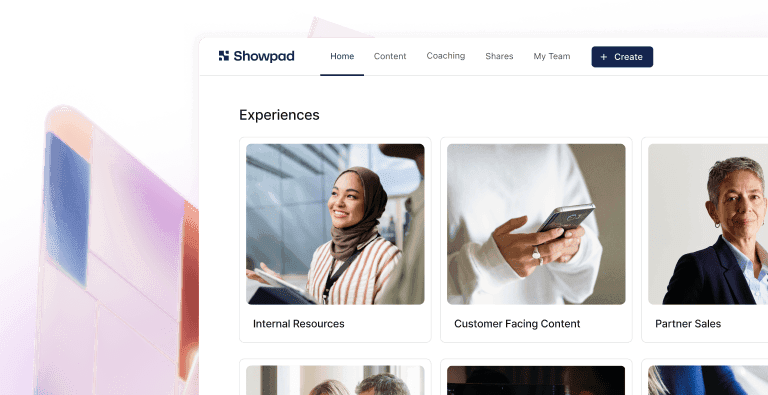


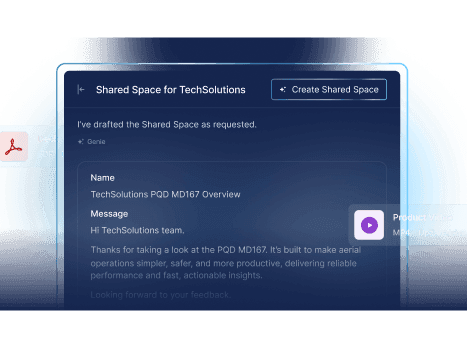








Legacy sales enablement refers to platforms focused on content management and training, while modern enablement focuses on helping revenue teams execute effectively in live selling situations.
For years, sales enablement software solved an important problem. It gave sellers a place to find content, complete training, and stay aligned on messaging.
That mattered.
But in 2026, preparation alone is no longer enough.
Field teams are selling in tougher conditions than ever. Product portfolios are more complex. Buying groups are larger. Compliance pressure is higher. And in the moments that actually shape revenue — a plant visit, a hospital conversation, a distributor meeting, a pricing discussion, a product review — sellers need more than access to materials. They need help executing with confidence.
That is where many organizations start to feel the gap.
They have content libraries. They have training programs. They have enablement workflows.
But when it is time to act, reps still waste time looking for the right answer. Managers still struggle to coach consistently across regions and teams. Marketing still works to maintain control without slowing the field down. Buyers still get static follow-up instead of an experience that helps them move forward.
That is not a preparation problem.
It is an execution problem.
And for organizations with complex field sales motions, it is one of the clearest signs that legacy enablement models are starting to fall short.
TL;DR
- Legacy sales enablement focuses on content access and training
- Modern revenue teams need execution support in real selling moments
- The gap between preparation and execution is where deals slow down
- Execution-focused enablement connects content, coaching, and buyer engagement
- Platforms like Showpad are built to close the execution gap
What Should Revenue Leaders Expect from a Sales Enablement Platform?
A lot of teams still ask a familiar question: Do our reps have access to content?
That is no longer the right question.
The better question is this: Does our platform help reps execute better in live selling situations?
That means looking at questions like these:
- Can sellers find the right asset fast, even across a large and complex content library?
- Can managers reinforce the same winning behaviors across teams, territories, and product lines?
- Can marketing maintain content quality, compliance, and consistency without creating drag?
- Can buyers get an experience that helps them evaluate a complex product instead of another static deck?
- Can enablement prove impact on seller behavior and revenue performance, not just content views and course completions?
If those answers are inconsistent, your team may be prepared on paper but still under-equipped where it counts most.
Why Legacy Sales Enablement Platforms Are Falling Behind
Legacy sales enablement platforms are falling behind because they focus on preparation rather than helping teams execute in real-world selling situations.
These enablement platforms were built around a useful idea: centralize content, standardize training, and help teams get ready.
That foundation still matters. But it does not go far enough for modern field-selling organizations.
Preparation does not automatically translate into execution. Not when sellers are juggling thousands of SKUs, evolving pricing, strict regulations, distributor relationships, and buying committees that expect clear answers in real time.
In those environments, the gap between knowing and doing gets expensive.
It slows deals down. It creates inconsistency in the field. It makes coaching harder to scale. It leaves marketing without confidence in what buyers are actually seeing. And it limits visibility into whether readiness programs are changing real behavior.
This is why more revenue leaders are rethinking what they need from enablement. They are not just looking for a system that stores knowledge. They are looking for a platform that helps teams apply it.
What Is Execution-Focused Sales Enablement?
Execution-focused sales enablement helps revenue teams take the right actions in live selling moments, not just prepare in advance.
It looks like this:
- A rep pulls up the right spec sheet in seconds before a customer conversation.
- A manager coaches to a repeatable standard across the business, not just within one strong region.
- A marketer knows the latest approved content is what the field is actually using.
- A buyer gets a guided experience that makes a complex product easier to understand and easier to evaluate.
- An enablement leader can see whether investments in content and readiness are improving real selling behavior.
That is the shift from enablement as preparation to enablement as execution.
Why Execution Matters More in 2026 for Modern B2B Sales
Selling in the field is getting harder, not easier.
There are more stakeholders involved in every decision. More pressure to personalize. More compliance scrutiny. More expectation for speed. Less room for sellers to pause, search, and piece things together on the fly.
Revenue leaders do not need another platform that helps teams look prepared. They need one that helps teams perform when the pressure is on.
That is why the market is moving beyond legacy enablement thinking. The bar is higher now. Organizations need tighter alignment between strategy, content, coaching, buyer engagement, and field execution.
What Makes Modern Revenue Enablement Platforms Different?
Modern revenue enablement platforms stand apart by connecting content, coaching, buyer engagement, and AI into a single execution layer.
That matters most in industries where selling is complex, distributed, and high stakes. Manufacturing. Medical devices. Consumer products. Chemicals. Enterprise technology. In these environments, success depends on what happens in the field, not just what gets assigned in training.
The teams that outperform are not the ones with the most content. They are the ones that make it easier for sellers, managers, marketers, and enablement leaders to act on the right insight in the right moment.
How Showpad Supports Execution-Focused Sales Enablement
Showpad was built for organizations where selling is complex, fast-moving, and field-driven.
It helps teams move beyond preparation by connecting content, readiness, buyer engagement, and governed AI in one platform. That means sellers get the right answers faster, managers can coach what works, marketing can maintain control without slowing execution, and buyers get clearer, more useful experiences.
For organizations trying to close the gap between strategy at headquarters and execution in the field, that difference matters.
How to Evaluate Your Sales Enablement Platform Before Renewal
Before you invest in another year of the same model, ask this:
Is your current platform helping your team prepare?
Or is it helping your team execute better in the moments that actually drive revenue?
That is the question more revenue leaders are starting to ask.
And it is the reason legacy enablement is no longer enough for teams that need to perform where it matters most.