The Field Report — Showpad
The Field Report — Issue 2 header

If you lead a revenue team that sells physical products, I want to talk about one thing that should be keeping you up at night (if it isn't already): your company's knowledge gap is widening faster than you can close it.

Here's what I mean.

AI is accelerating product innovation across every industry we serve. R&D cycles are shorter. New SKUs, new formulations, new configurations are hitting the market at a pace that would have been unrecognizable five years ago. That's exciting for your business. It's terrifying for your field teams.

Because at the same time your portfolio is expanding, your most experienced sellers are heading out the door. Retiring. Moving on. Taking decades of product knowledge, customer relationships, and deal instincts with them.

What's left is a growing gap between what your products require sellers to know and what your sellers actually know. And every function in your revenue org is feeling it differently.

If you're in marketing, you're creating campaigns for products your sellers can't confidently talk about yet. You're building materials that assume a level of fluency the field doesn't have. And you have no clear signal telling you which messaging, content, or formats are actually helping sellers have better conversations versus which ones are falling flat.

If you're in enablement, you're trying to compress years of expertise into weeks of onboarding. You're building learning programs for a portfolio that changes faster than you can update the curriculum. And you're watching ramp times stretch while the pressure to produce revenue immediately only grows.

If you're a field seller, you're going into rooms where the buyer has done more research than you. They expect clinical depth, technical fluency, and regulatory awareness, and they can tell immediately when you're not there yet. The margin for "I'll get back to you on that" is shrinking fast.

If you're in rev ops, you're watching the data tell a story nobody wants to hear. Ramp times are up. Productivity per rep is flat or declining. Win rates are wobbly. And the dashboards can reveal what's happening but not why, because the real problem — a knowledge gap that lives in your sellers' heads — doesn't show up in a CRM field.

This is the problem underneath all the other challenges. Buyer expectations are rising. Buying committees are expanding. Deal complexity is increasing. But none of those are solvable if your team doesn't have the product knowledge and deal fluency to navigate them.

Your products are getting more sophisticated. The people selling them are getting less experienced. And AI is widening the gap from both directions.

That's the force I wanted to open with in this second edition of The Field Report. Not all four forces driving the revenue effectiveness gap, just this one. Because it's the one that touches every function, every deal, and every quarter. The good news is that once you can see this gap clearly, you can start to close it. The teams pulling ahead aren't the ones with more experienced sellers — they're the ones who stopped losing the knowledge they already have.

Bernd Leger

CMO, Showpad

LinkedIn
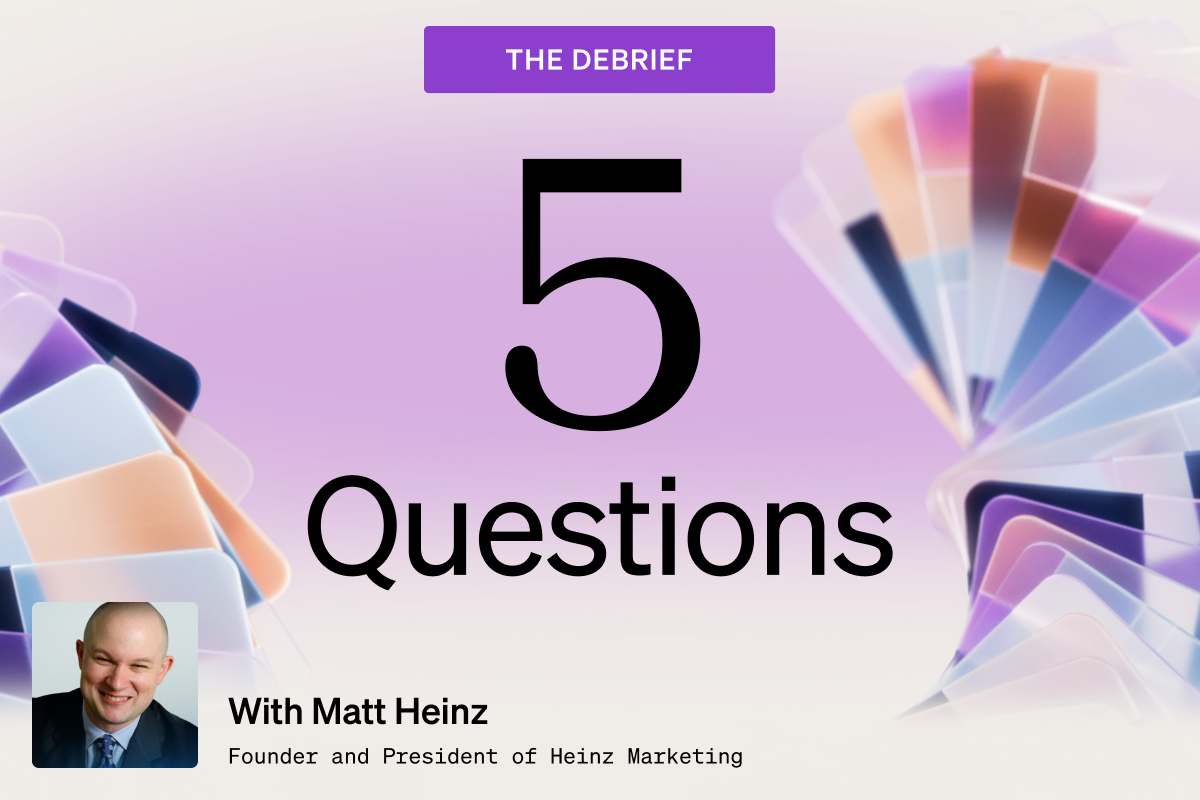
5 Questions

Every issue we'll sit down with a thought-leader to get their takes on the revenue effectiveness space. With us today is Matt Heinz. With stops at Microsoft, Boeing, and the Seattle Mariners, he's spent the last 17+ years in the trenches of pipeline generation, marketing-sales alignment, and revenue accountability as founder/president of national agency Heinz Marketing.

#1 What's one thing field-selling organizations should demand from their marketing teams that most aren't asking for today?

Stop asking for leads. Ask for buyer intelligence — who's in the buying group, what they already believe, and what your competitor planted before you walked in. Field sellers need ammunition they can use in the room that not only helps them build urgency but also rallies the buying group with confidence and consensus.

#2 You've been vocal about pipeline being a shared responsibility. In practice, for field-selling organizations with long cycles and deep relationships, who actually owns pipeline and who should?

Sales owns the number. But in field-selling organizations with long cycles, pipeline is built by everyone who touches the relationship over 12 to 18 months. Marketing, SDRs, account teams — all of it matters. The problem is everyone acts like it's someone else's job when the forecast is short. Establish accountability early.

#3 Marketing teams now have access to AI that can generate, personalize, and distribute content at scale. For organizations where the sale still happens face-to-face, what does that capability change for the seller in the field?

It changes the prep. A field seller can walk into any account conversation with personalized context, competitive intel, and synthesized stakeholder insights — work that used to take days of research. The meeting still requires a human. AI gives that human a serious head start, every time.

#4 You have a front-row seat to how hundreds of enterprise B2B organizations go to market. What's one thing the best ones are doing right now that the rest aren't even thinking about yet?

The best ones have moved well past AI pilots. AI is built into every workflow, every role, and every rep's daily prep — and that's a gap most organizations are only now starting to realize they need to close.

#5 If you could get every CMO and CRO/CSO in the same room for 30 minutes, what's the one conversation you'd force them to have?

Where does pipeline actually come from — and who owns the gap between what marketing delivers and what sales needs to close? Most CMOs and CROs measure different things and call it alignment. That conversation unfortunately rarely happens until the forecast is already short, when it's really too late.

For the last decade Heinz has also hosted Sales Pipeline Radio. For many B2B sales and marketing diehards, his 30-minute Thursday podcast is a weekly ritual. Check it out.
The Dig

Not a data dump. One number — unearthed because it reveals something beneath the surface and examined for the teams confronting it in the field.

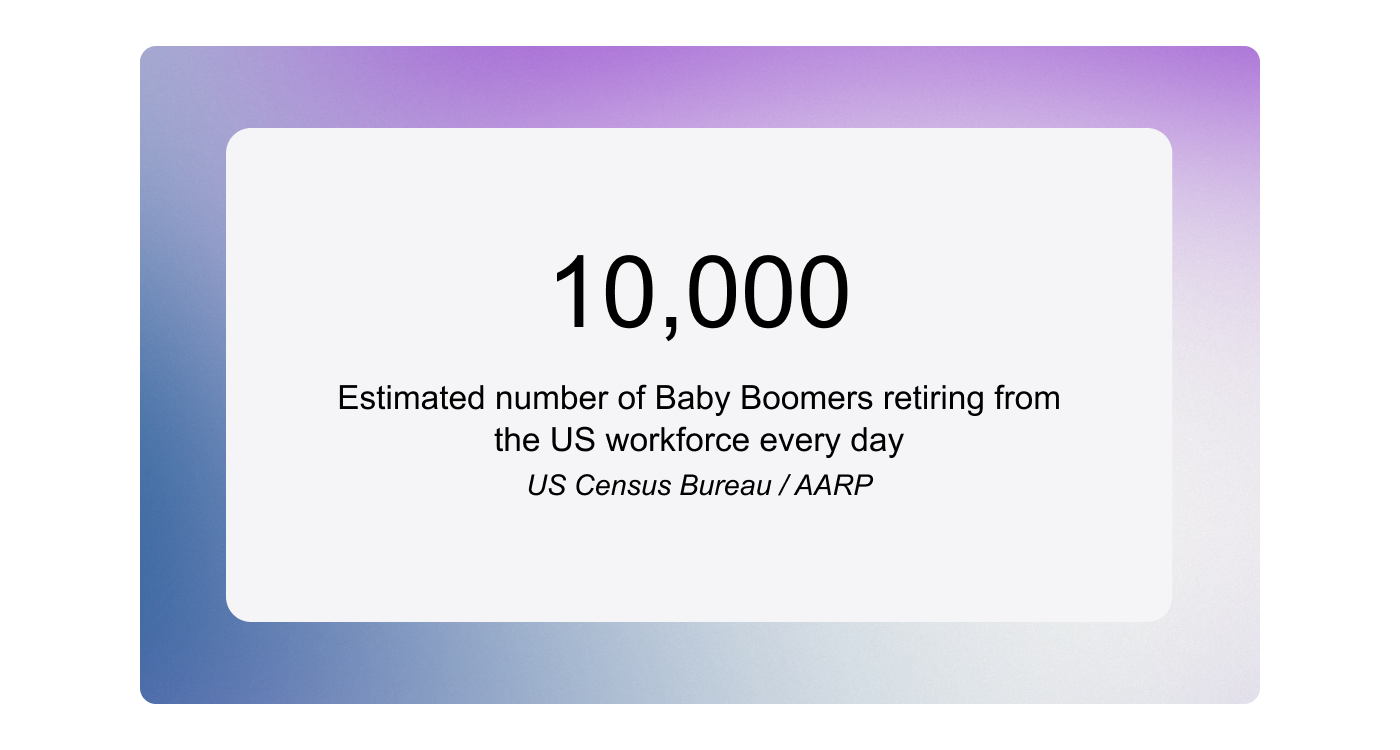
10,000 — Estimated number of Baby Boomers retiring from the US workforce every day

That's not a general workforce stat. It's a revenue stat. Because in field-selling organizations, those retirees aren't just experienced employees. They're the people who knew every buyer (and their spouse and kids) by name, every product by spec, and every deal by instinct.

When they leave, that knowledge doesn't magically transfer to a CRM. It doesn't live in a training deck. It walks out the door, and the next rep starts from scratch, in a market that's more complex than the one their predecessor navigated for 30 years.

The companies treating this as an HR challenge are missing the point. This is a revenue continuity crisis.

Field Conditions

The terrain your team sells across is always shifting. In each issue, we zoom out to a big-picture force reshaping the markets, and zoom in on a ground-level shift worth tracking.

Zoom Out

Zoom Out: Macro force shaping markets

The great satisficing — Something strange is happening in B2B purchasing. Buyers aren't optimizing anymore. They're "satisficing" — choosing the option that's good enough, fast enough, and low-risk enough to get through the committee.

This is survival, not laziness. When a buying committee has seven stakeholders with seven sets of priorities and a 14-month purchase cycle, the path of least resistance wins. The product that's easiest to understand, easiest to justify internally, and easiest to say yes to gets the deal. Not necessarily the best one.

For companies with genuinely superior products — more sophisticated, more sustainable, more configurable — this is a problem. Your product's complexity is your advantage in a technical evaluation, but it's your liability in a committee decision.

We're watching how the best organizations are simplifying the story without dumbing down the product. The ones who can translate deep technological value into clear, consensus-minded language are pulling ahead.

The big question for your revenue team: Is your product's complexity helping your sellers win deals, or giving the committee a reason to choose something simpler?

Zoom In

Zoom In: Micro trend worth watching

The "champion deck" — Smart reps are creating short, informal decks — not for the buyer, but for the buyer's internal champion to use when selling on their behalf.

Three to five slides. The problem. The solution. The ROI. The ask. Designed to be forwarded, presented in a 10-minute internal meeting, and survive without your seller in the room.

It's a recognition that in complex deals, your biggest advocate has to go to bat for you when you're not there. Most enablement programs don't equip them to do that. We're watching this emerge as an informal best practice — and wondering when it'll become a standardized one.

What you should be checking: Does your champion have something they can use to sell internally?

Overheard in the Field

One line. No attribution. What gets said between meetings, after QBRs, or while clocking windshield time. If it sounds familiar, that's the point.

Overheard quote
Effectiveness Essentials
Great Read

Great Read

Thinking in Bets by Annie Duke

A book about making better decisions when you don't have all the info. Duke, a former pro poker player, argues that most people confuse good outcomes with good decisions.

For revenue leaders managing forecasts, pipeline, and territory bets with incomplete data, this reframes how you think about risk.

READ MORE
Great Listen

Great Listen

Acquired, the LVMH episode

A four-hour deep dive into how Bernard Arnault built the world's largest luxury conglomerate. Sounds unrelated until you hear how LVMH thinks about brand, distribution, and field execution across dozens of product lines and global markets.

The parallels to complex field-selling organizations are surprisingly striking.

LISTEN NOW
Great Follow

Great Follow

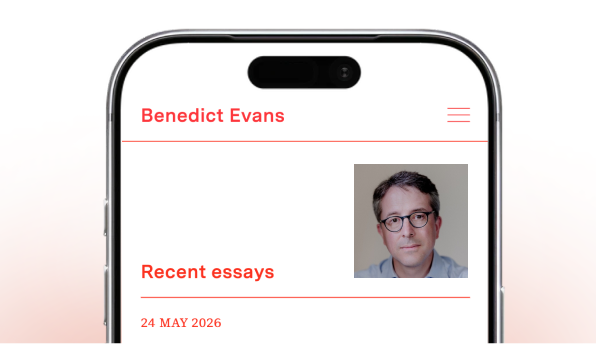
Benedict Evans, tech analyst

Evans' annual "Big Technology Presentation" is required reading across industries. He doesn't just cover what's happening in AI and technology but maps where it intersects with logistics, energy, manufacturing, and supply chains.

The rare analyst who connects what's happening in Silicon Valley to what's happening on the factory floor.

FOLLOW
Great Idea

Great Idea

The Silent Pipeline Review

Run your next pipeline review with one rule: no opinions. Reps can only reference data, buyer actions, or documented next steps. No "I feel good about this one" or "They seemed interested."

If a deal can't be described without subjective language, it tells you exactly where your visibility gaps are.

Try it for one cycle. The patterns surface fast.

Dispatch from Base Camp

Dispatch from Base Camp

Direct from Showpad HQ. One thing we've built — and why it matters for the teams we serve.

Excellence in the Field is back! Showpad's flagship series returns this fall, making even more stops around the world. In each of five cities — New York, Chicago, Austin, London, Düsseldorf — we're bringing 50 revenue leaders together for half-day workshops built around the challenges keeping us up at night.

Each gathering includes:

  • An exclusive look at our proprietary research on what's quietly costing revenue teams
  • Customer-led classes on AI rollouts (the wins and the do-overs)
  • Working session with our product team on what's shipping next
  • Small-group roundtables you'll steer alongside marketing, enablement, and sales colleagues

Spots are by application only. Find your city and request to join.

Thanks for reading The Field Report. If this earned a spot in your inbox, forward it to someone who'd get value from it, too. Someone send this to you? Get it directly by subscribing here and check out issue 1 while you're there.

SUBSCRIBE HERE