









Have you noticed your B2B buyers are coming into early-stage buying conversations with deeply informed opinions? You’re not wrong: the average buyer engages with 3 to 7 pieces of content on your website before even reaching out to your sales team.
average number of content pieces a buyer engages with in advance of sales conversations

This means your typical pitch — the one that merely covers the basics of your offering — probably isn’t going to provide them with very many newfound insights, such as how it can enhance their business objectives, customer experience, and even their own reputation within their company.
This missed opportunity calls for a fresh approach: value selling.
What is value selling?
Value selling is about creating real, impactful value for buyers by linking products or services to tangible benefits and ROI. This approach involves understanding customer challenges, providing personalized coaching, and using sales tools for better buyer collaboration. Ultimately, the methodology significantly boosts sales performance and drive quota attainment.
With value selling, sellers act as trusted advisors, aligning solutions with buyers’ broader business goals and justifying costs. This evolution is crucial in today’s B2B sales environment, where decision-making groups are larger and more complex. In fact, 77% of business leaders describe their last B2B buying experience as very complex or difficult. Unlike feature-function selling, which focuses solely on product specifications, value selling emphasizes the measurable impact on the buyer’s business, fostering long-term relationships and driving meaningful outcomes.
of business leaders who describe their last B2B buying experience as very complex
Comparing value selling and solution selling
While both value selling and solution selling are effective sales methodologies, value selling represents an evolution of solution selling.
Solution Selling
Definition: The seller acts as a consultant, working closely with the buyer to understand their issues and propose an offering as the solution.
Objective — Problem resolution: Solve the buyer’s challenges through the offering.
Approach:
- Problem identification: Engage with the buyer to uncover specific pain points and challenges.
- Consultative selling: Guide the buyer through diagnosing the problem and implementing the solution.
- Customization: Tailor solutions to address the identified problems.
Value Selling
Definition: The seller is a trusted advisor who understands the buyer’s business goals and focuses on how the offering delivers overall value and ROI.
Objective — Business transformation: Drive long-term value for the buyer, ensuring that the offering is a must-have investment.
Approach:
- Value identification: Understand how the offering supports the buyer’s business goals.
- Trusted advisor: Guide the buyer through the purchase, helping them evaluate solutions and involve stakeholders.
- Business impact: Show how the offering delivers cost justification and time-to-value realization.
- Cross-team collaboration: Work with the wider revenue team to demonstrate value.
Understanding why sales leaders are coaching teams on value selling
Decision-making groups are larger and more diverse than ever before. According to Gartner, an average of 6 to 10 stakeholders are involved in B2B buying decisions today. Traditional seller-centric conversations and problem-solving approaches often fall short. That’s because they fail to address the collective demand for business impact, cost justification, and time-to-value realization.
Value selling is particularly suited to today’s sales landscape because it:
- Instills buyer confidence in the purchase decision.
- Empowers buying champions with a compelling business case.
- Addresses the diverse needs of large stakeholder groups.
- Facilitates long-term relationships by consistently delivering value.
Now, let’s dive into the actionable steps that sales and enablement leaders can take to implement this methodology effectively and improve seller quota attainment.
Step 1: Empower sellers to understand customer challenges
To truly engage and convert buyers, sellers must deeply understand their challenges. This requires going beyond surface-level knowledge to uncover the underlying issues buyers face. Effective techniques for gaining insights into customer needs include thorough research, engaging in meaningful dialogues with customers, and practicing empathy and active listening.
Conduct thorough research:
- Equip sellers with robust learning materials: Provide your sellers with comprehensive learning materials about target industries, competitors, and market positions. Incorporate these materials into your onboarding programs and ensure they are readily accessible in your content management system for customer conversation preparation.
- Develop buyer personas: Create detailed buyer personas that encapsulate the typical challenges, goals, and behaviors of your target customers. This approach ensures that your sellers can tailor their strategies to each buyer’s unique situation.
Engage in meaningful dialogues:
- Encourage open-ended questions: Train your sellers to ask open-ended questions that encourage buyers to elaborate on their pain points and goals. Examples include, “Can you describe the biggest challenge your team is facing this quarter?” or “What are your main objectives for the next year?”
- Practice active listening: Emphasize the importance of active listening, a skill that 46% of buyers rank as most important, but which managers often overlook. Train sellers to summarize what the buyer has shared and confirm understanding before proposing solutions. This demonstrates genuine interest and helps clarify the buyer’s needs.
Demonstrate understanding and value:
- Customize presentations: Instruct your sellers to tailor presentations to address specific customer pain points and objectives. Encourage the use of relevant case studies and examples that resonate with the buyer’s situation. Personalized decks for a given prospect were shared internally 2.3x more often.
- Articulate business impact: Teach sellers to clearly articulate how your product or service will solve the buyer’s problems and deliver measurable value. For example, explain how implementing your solution could lead to a 30% increase in operational efficiency, supported by data from similar clients.
When sellers show a deep understanding of customer challenges, they build trust and credibility, leading to better engagement, higher conversion rates, and stronger long-term relationships. Gartner research indicates that B2B buyers who found the information provided by sellers to be helpful were 2.8x more likely to experience a high degree of purchase ease and 3x more likely to buy a larger deal with less regret. This underscores the importance of a well-informed and empathetic approach in value selling.
of buyers rank active listening as the most important sales skill
more internal sharing by buyers when decks were personalized

more likely that B2B buyers closing larger deals with less regret when the seller's info is genuinely helpful
Step 2: Provide personalized coaching and real-time reinforcement
Personalized coaching and real-time reinforcement are crucial for enabling sellers to adopt and effectively implement value selling techniques. This approach should be ongoing and tailored to individual needs.
Sales leaders should focus on how their sellers can apply value selling principles in their interactions with buyers, such as understanding customer needs, providing guidance on how customers can achieve business objectives, and quantifying impact of their investments.
3 structured coaching programs
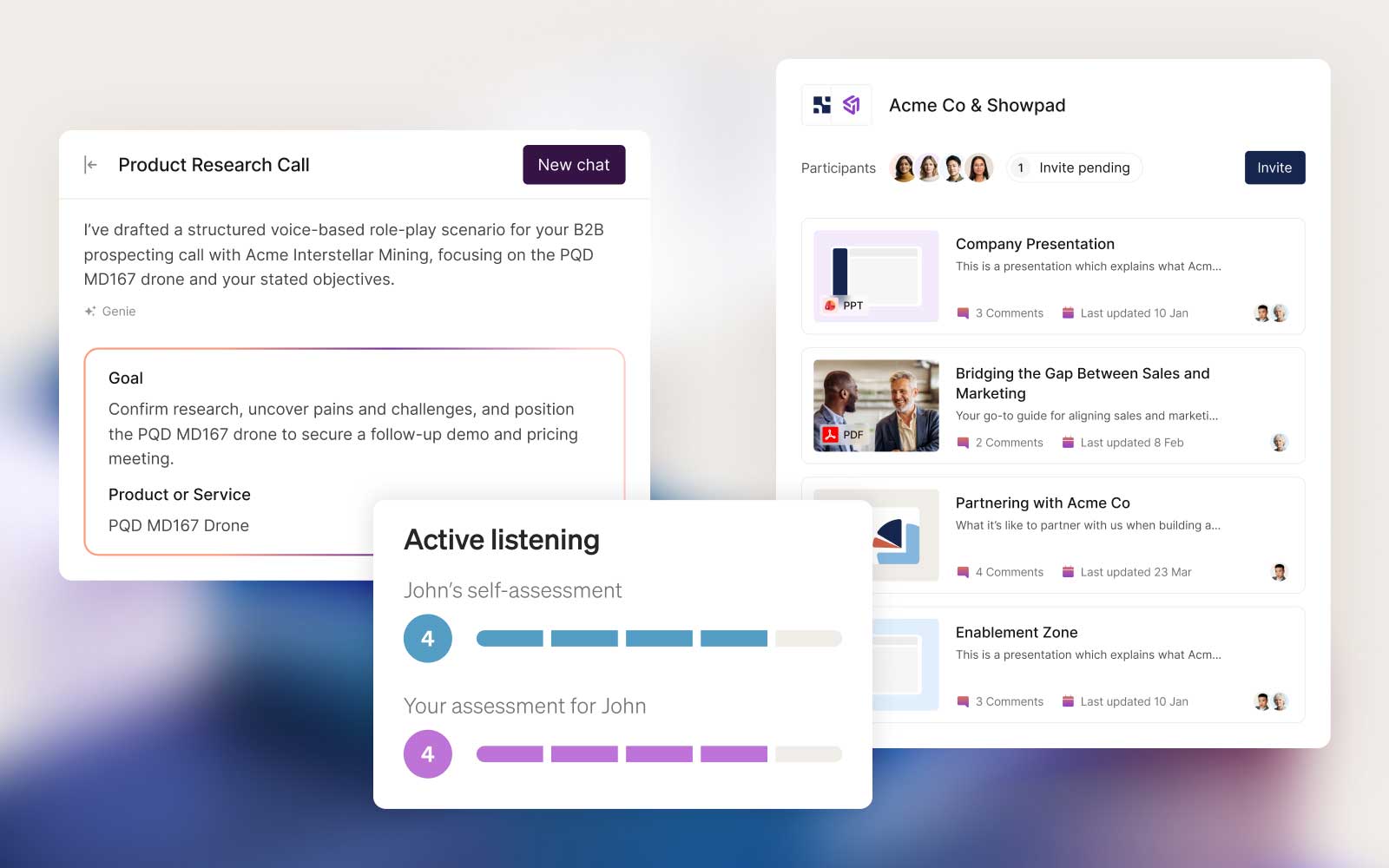
- Role-playing exercises: Simulate various customer interactions to prepare sellers for real-world situations. This helps them practice and refine their techniques in a controlled environment.
- Interactive feedback sessions: Conduct constructive feedback sessions to help sellers improve their techniques. These sessions should be specific, actionable, and focused on continuous improvement in core value selling skills, such as active listening and value articulation.
- Presentation skills training: Emphasize best practices for sharpening presentation skills, including the importance of speed, pauses, body language, and emotion. These elements are critical for engaging buyers and conveying confidence and credibility.

3 ways to use AI for real-time reinforcement
- AI-assisted pitch practice: AI coaching platforms offer a practice playground for sellers to hone their pitch skills. These platforms benchmark sellers against top performers and provide real-time feedback on pitch style, helping sellers get field-ready faster. This allows sales leaders to deliver personalized feedback at scale and on the seller’s own timeline.
- AI-powered search: AI-powered search tools intuitively surface quick answers to seller questions, eliminating the need to comb through endless, irrelevant search results. This not only saves time but also enriches the sales team’s understanding with deeper context, empowering more knowledgeable buyer conversations.
- Up-to-date insights: AI-powered asset summaries distill key learnings from content into bite-sized takeaways. This helps sellers stay sharp with need-to-know information before heading into their next call or meeting.
Research shows that organizations using AI-powered tools for coaching and training achieve significant improvements in seller performance, with 20% more customer meetings and a faster ramp-up time for new hires. Effective coaching and real-time reinforcement accelerate the sales process by equipping sellers with the skills and knowledge they need to close deals efficiently.
Step 3: Leverage sales tools for better buyer collaboration
Sales tools are essential for enhancing buyer collaboration and supporting value selling. These tools should put the buyer at the center of the conversation, ultimately benefiting both the buyer and the seller. Essential sales tools include CRM systems, AI-powered analytics, and collaboration platforms.
One powerful and popular selling tool is the digital sales room (DSR).
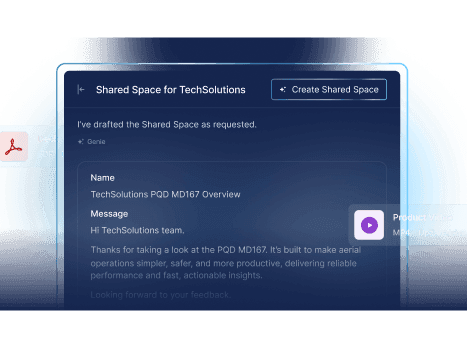
A digital sales room is a shared digital space where sellers and buyers can interact, share content, and collaborate throughout the sales process. These rooms provide a seamless, personalized experience, making it easier for buyers to access all relevant information in one place. The market size for digital sales rooms is expected to reach $9.8 billion with a CAGR of roughly 16.8% by 2034. And by next year, 80% of interactions between buyers and suppliers will happen in digital channels, highlighting the need for sales leaders to integrate DSRs to stay competitive.
of buyer-seller interactions will occur in digital channels by 2025
expected market size of DSRs by 2034
How to use digital sales rooms
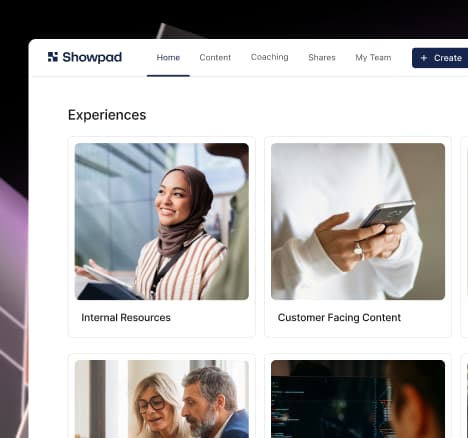
- Centralized content hub: Instead of sending multiple emails with various attachments, sellers can use digital sales rooms to consolidate all relevant content in one location. This creates a one-stop shop for all information. It makes it easier for buyers to find what they need and for sellers to track interactions.
- Real-time collaboration: Digital sales rooms support real-time conversations within the shared space, enabling ongoing engagement and immediate responses to buyer inquiries. This facilitates more effective communication and collaboration.
- Personalized experience: Sellers can tailor the content and resources within the digital sales room to meet the specific needs of each stakeholder, ensuring that every interaction is relevant and impactful.
3 benefits of digital sales rooms
- Enhanced buyer engagement: By providing a centralized, easily accessible hub for all sales-related content, digital sales rooms enhance buyer engagement and streamline the sales process.
- Building trust and long-term relationships: Digital sales rooms are not just for initial sales. They support trusted, long-term relationships with customers by maintaining a continuous, collaborative space for ongoing interaction and support. This fosters a stronger relationship beyond the initial sale, ensuring continued value delivery and customer satisfaction.
- Improved sales efficiency: Digital sales rooms help sellers stay organized and efficient, reducing the time spent managing content and communications. This allows sellers to focus their time on building relationships and closing deals.
Advanced sales tools like DSRs enables sellers to tailor conversations for stakeholder needs, ensuring every interaction is relevant and impactful. With DSRs, content can be organized and accessed by both sellers and buyers. These tools facilitate more effective communication, ultimately leading to better sales outcomes, greater quota attainment, and stronger customer relationships.
The impact of empowering buying champions
Buying champions play a critical role in advocating for solutions internally, so building trust with these champions is essential. Well-trained value sellers know that these long-term relationships can only be forged with transparency, relevant tools, insights, and evidence, and ongoing support.

In fact, Forrester reports that 82% of buyers viewed multiple pieces of content from the winning vendor, underscoring the importance of providing value information to buying champions, while Gartner found that companies supporting buying champions see a 20% increase in buyer engagement and a 50% higher likelihood of a successful sale. By focusing on demonstrating value and cost justification, sellers can navigate complex sales cycles, meet the needs of buyers, and achieve quota attainment.
Put value selling into practice
Help your team apply value selling in every customer conversation.

Frequently asked questions
Value selling is a sales methodology where sellers act as trusted advisors, linking their products or services to tangible business outcomes and ROI for the buyer. Unlike traditional feature-focused selling, which emphasizes product specifications, value selling centers on the buyer’s goals, challenges, and the measurable impact your solution delivers. It’s about proving why the investment matters — not just what the product does.
Today’s B2B buying groups are larger and more complex, with six to ten stakeholders typically involved in a purchase decision. Value selling helps sellers build trust across these groups by providing compelling business cases, cost justification, and clear ROI. When sellers consistently demonstrate measurable value, they close bigger deals with more confidence — and buyers experience less regret.
AI-powered tools can accelerate value selling adoption in several ways. AI coaching platforms let sellers practice their pitch and receive real-time feedback benchmarked against top performers. AI-powered search helps sellers quickly surface relevant answers and context before buyer conversations. AI-generated content summaries distill key insights into bite-sized takeaways, so sellers walk into every meeting prepared and informed. And AI agents can reinforce your sales methodologies through the guidance they give sellers.
A digital sales room (DSR) is a shared online space where sellers and buyers can collaborate, share content, and communicate throughout the sales process. DSRs support value selling by centralizing all relevant materials in one place, enabling real-time collaboration, and allowing sellers to personalize the experience for each stakeholder. This makes it easier for buying champions to access the information they need to advocate for your solution internally — driving faster decisions and stronger long-term relationships.