










You’ve spent weeks refining your positioning. The decks are polished, the one-pagers are approved, and everything;s uploaded to the content library. But when your sellers get in front of a buyer, the messaging doesn’t come through the way you intended — or it doesn’t come through at all.
The problem usually isn’t motivation. Your sellers want to deliver a strong message. The problem is comprehension. If a seller can’t explain your messaging in their own words — without the slide behind them — they’re not going to use it.
And that’s a revenue problem. When sellers default to whatever language feels comfortable instead of the positioning your team built, buyers get an inconsistent experience. More than 40% of B2B deals stall due to internal misalignment, and unclear messaging between sales and marketing is one of the most common contributors.
The good news: this is fixable. It starts with how you package and transfer messaging to the field.
Why dropping assets into a shared drive doesn’t work
Uploading a new pitch deck or emailing a messaging document isn’t enablement — it’s distribution. There’s a difference. Sellers receive dozens of updates, assets, and announcements every week. Without context on why the messaging changed, what problem it solves for the buyer, and how to use it in a live conversation, even the best-crafted materials get ignored.
The result: sellers fall back on what they know. They use outdated language, improvise their own positioning, or skip the messaging entirely. Not because they don’t care. But because they were never properly equipped to deliver it.
Make messaging simple enough to say out loud
If your messaging requires a deck to make sense, it’s too complicated for the field. Sellers need to communicate your value in real-time — in hallway conversations, on-site visits, and unscripted moments with buyers.
Test your messaging with this filter: can a seller explain it in two sentences without looking at a slide? If not, simplify.
Focus on three things:
- The buyer problem you solve
- How your product solves it
- Why you’re different from the alternative
Strip out internal jargon, technical language, and anything that sounds like it belongs in a strategy document rather than a buyer conversation.
Give sellers the “why” behind the words
Sellers don’t just need the messaging — they need to understand the reasoning behind it. When a seller knows why you chose specific language, what data or buyer insight informed it, and how it connects to the value proposition, they can deliver it with conviction rather than recitation.
This means investing in more than a one-time rollout. Run learning sessions that walk sellers through the strategic decisions behind the messaging. Share the buyer research, competitive intelligence, and market data that shaped it.
When sellers understand the logic, they can adapt the message to different buyers and situations without going off-script — because they grasp the intent, not just the words.
Build marketing messaging into the places sellers already work
Messaging adoption increases when it’s embedded in the seller’s daily workflow rather than stored in a separate location they have to seek out. Platforms like Showpad let you connect messaging directly to the content sellers are already using — linking positioning guidance to specific pitch decks, one-pagers, and buyer-facing assets so the context is right there when they need it.
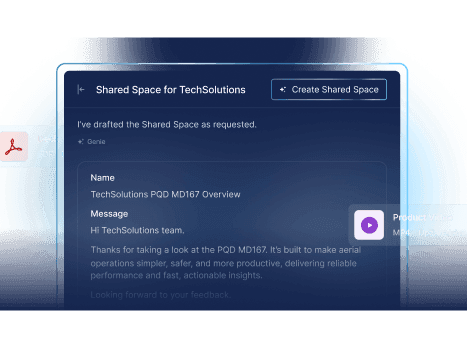
With Genie Assistant, sellers can also get instant answers to messaging questions in the flow of work. They only need to ask the AI assistant how to position a product for a specific buyer scenario rather than hunting through documents or pinging a colleague. That means less time searching, more confidence in the conversation.
Measure whether sellers are actually using the messaging
You can’t improve what you can’t see. Track which messaging assets sellers are using, how often they’re being shared with buyers, and which ones show up in winning deals. Analytics AI in Showpad surfaces these patterns so you can identify where messaging is landing — and where it’s falling flat.
Use that data to iterate. If a specific asset isn’t getting traction, the answer might not be “sellers are going rogue” — it might be that the messaging needs simplification, better context, or a different format. Regular feedback loops between marketing and the field keep messaging relevant and usable over time.
Your sales team is your most valuable messaging channel
Your sellers are in front of buyers every day. That makes them the highest-impact distribution channel your marketing team has — but only if they can deliver the message clearly and confidently. The investment is in making sure the people who deliver your messaging — the sellers — actually understand it.
When sellers can explain your value in their own words, grounded in the reasoning behind it, your messaging stops being a marketing asset and starts being a revenue driver.
How do you prove your messaging is working?
Learn how revenue leaders connect enablement activity to revenue outcomes.