








THE CHALLENGE
A six-week window, a thousand agents, and zero room for error
Every fall, millions of Americans face the same daunting question: which Medicare plan is right for me? When they call for help, the voice on the other end is often a Bloom agent — licensed, trained, and representing about a dozen health-plan clients. That agent has to get it right. The guidance is regulated by the Centers for Medicare & Medicaid Services (CMS), the product sets vary by carrier, and the enrollment window is short.
Getting them ready is Susan Berg’s job. As Bloom’s Director of Training and Development, Berg oversees onboarding that absorbs 500 to 700 new seasonal hires in a single ramp ahead of Medicare’s six-week Annual Enrollment Period (AEP).
“This is not the telecom space I came from, where you have months to get an agent proficient,” Berg says. “We have days and weeks.”
The initial trainer-led model couldn’t keep up. Instructors ran roleplays in front of the entire class, so only one or two new hires practiced while everyone else watched. Certification required one trainer to one agent, leaving the rest idle. Real practice didn’t happen until nesting — the supervised transition period where they start taking live calls before working independently.
“This is a heavily regulated business, and these are sensitive conversations,” Berg says. “That confidence only comes from repetition. We didn’t have a way to give agents repetition before putting them in front of a real customer.”
Agents often hit their stride right as the season they’d trained for was ending.
THE SOLUTION
A safe space to build muscle memory before the call counts
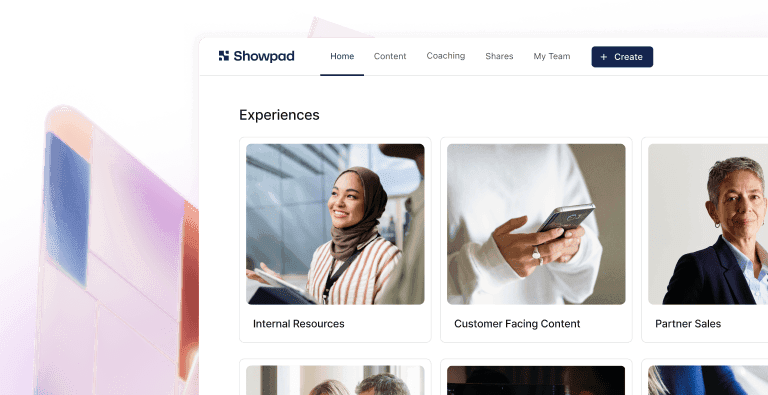
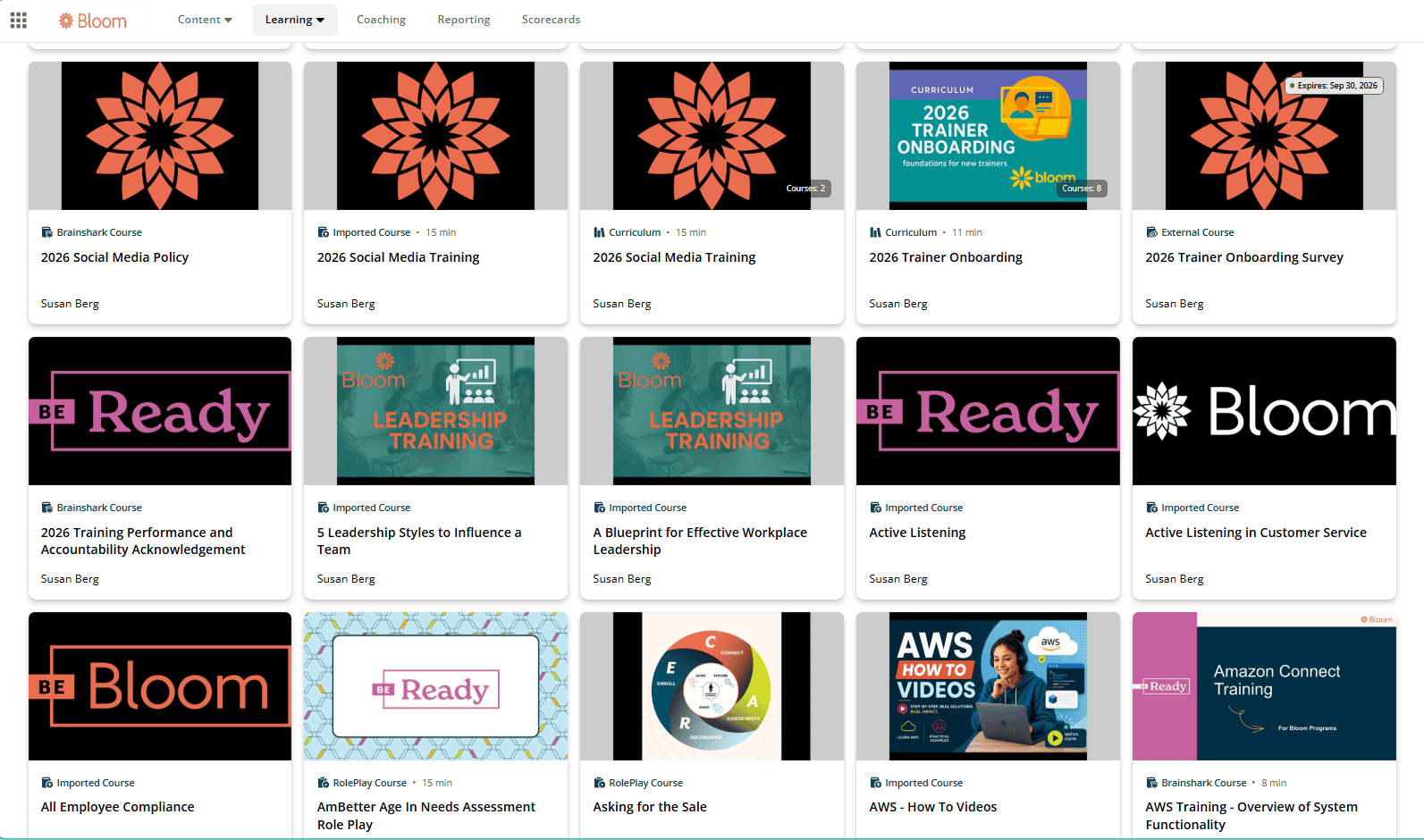
Bloom chose Showpad to bring its entire BeReady onboarding methodology onto a single platform — so every trainer and agent cohort works from the same certified content across a dozen client programs.
But the real transformation is Roleplay AI.
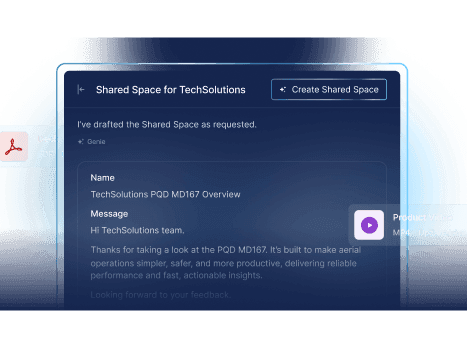
An agent steps into a scenario with a designated client profile, a clear goal, and the exact criteria they’ll be scored on: active listening, objection handling, assumptive language, professionalism, and compliance. The specifics for Medicare telesales are exacting: agents can never say the word “free,” must state their full name, and must ask specific CMS-required questions.
Practice builds in layers. Early in training, the conversation pauses between each exchange — “practice with the training wheels on,” as Berg puts it — giving agents time to hear a customer’s objection, pull up resources, and construct a response. Closer to certification, the mode shifts to real-time audio that mirrors the pace and pressure of an actual call. After each run, agents receive scored feedback, then run it again.
“Knowledge and execution are two totally different muscles,” Berg says. “Agents fly through their knowledge checks, then freeze on a call when a real caller pushes back. Roleplay AI lets them build that execution muscle in stages.”
One simulation within Showpad captures this approach perfectly: a “rapid-fire objections” drill where the virtual customer keeps pushing back no matter what the agent says. The customer never moves forward — that’s the point. Agents weren’t so keen at first. Then they got on live calls and found themselves responding to real objections on instinct — because they’d already handled them dozens of times.
Today, every health-plan client’s curriculum includes seven to 10 roleplay simulations. Outbound teams — where agents are calling people who aren’t expecting to hear about Medicare — run 15 to 20. Certification chains three simulations together to mirror the full arc of a real Medicare call. And because Bloom can build its own scenarios so quickly, the team can stand up an additional drill in minutes when a new conversation pattern emerges in the field.

“Roleplay AI turned ‘I know the material, I can take a test’ into ‘I’ve actually done this before.’ That’s what makes agents more confident once they get on the call.”
Susan Berg
Director of Training and Development at Bloom
THE IMPACT
Agents who show up ready — and stay through the season
The change was visible on the floor before it showed up in any report.
“The earliest sign wasn’t a dashboard; it was our sales directors,” Berg says. “They noticed agents coming out of training more prepared, more confident, not as hesitant on the phones.”
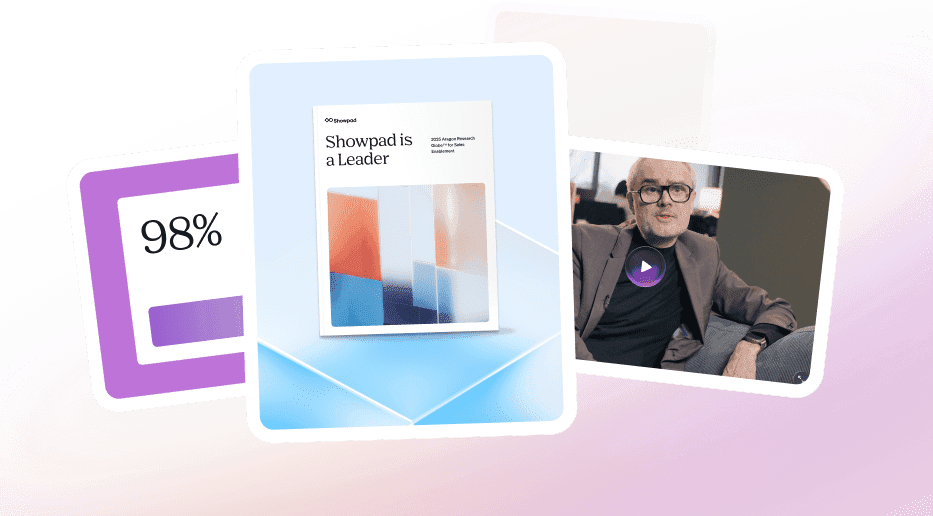
of Bloom agents agreed Showpad’s Roleplay AI prepared them for real-world scenarios

Showpad adoption across the organization

The year before, one director had described new hires reaching their first calls “like deer in headlights.” After Bloom embedded Roleplay AI, it saw lower agent attrition during nesting on its outbound program.
Survey feedback confirmed it: 85% of agents agreed that the conversation simulator helped them practice real-world scenarios effectively.
Bloom trainers also gained something they never had before. Instead of judging readiness from a single observed roleplay, they can now review scored simulations and hand managers a specific gap to focus on with coaching. Certification changed, too. Agents used to walk into it cold. Now they’ve already practiced the full conversation dozens of times.
“It gave me a safe space to practice without the fear of making a real mistake. I was able to repeat the scenarios as many times as I needed until I felt confident.”
Bloom agent
Training survey response

WHAT’S NEXT
From training the agents to coaching the coaches
The practice model is already expanding. Berg’s team is building Roleplay AI coaching simulations for floor managers — many promoted from agent roles with no prior leadership experience — so they can rehearse giving feedback before doing it live.
Bloom is also embedding more simulation into the nesting phase, so the bridge between training and live calls becomes a continued practice environment rather than a sharp cutoff. Scorecards are being built to connect training performance to the metrics that matter in a six-week season: speed to proficiency, compliance adherence, and call quality.
For a team that once let new hires learn on real callers, the shift is profound: every agent now shows up ready for a conversation that can shape someone’s healthcare for the year ahead.