The Field Report — Showpad
The Field Report — Issue 3 header

I spend a lot of time in the field. Not in strategy sessions with other revenue execs.

Sitting in customer meetings. Watching what happens — live — when the strategy we built at HQ meets a real buyer conversation in Stuttgart or Sheffield or Bentonville. Then debriefing with sellers in the Uber back to the airport.

What I observe consistently: the strategy is usually solid. The problem is the last mile delivery.

In the last edition of this newsletter, Showpad's CMO wrote about the knowledge gap — the widening distance between what your products require sellers to know and what they've actually committed to memory and can confidently deliver. I want to push it further. Because I've watched reps who have the knowledge still lose the deal. Not because they didn't know enough. Because the way we asked them to execute that knowledge didn't fit the room they were in.

That's the execution gap. And it's the second force compounding the revenue effectiveness gap.

Here's what that reality looks like.

Your leadership team invests weeks building a new strategic sales narrative. It's sharp. It's differentiated. It maps to every buyer persona. It handles the top five competitive objections. It gets presented at the next annual kick-off with new pitch decks, new talk tracks, new sales materials. Everyone is hyped. The crowd applauds. Sellers are bought-in.

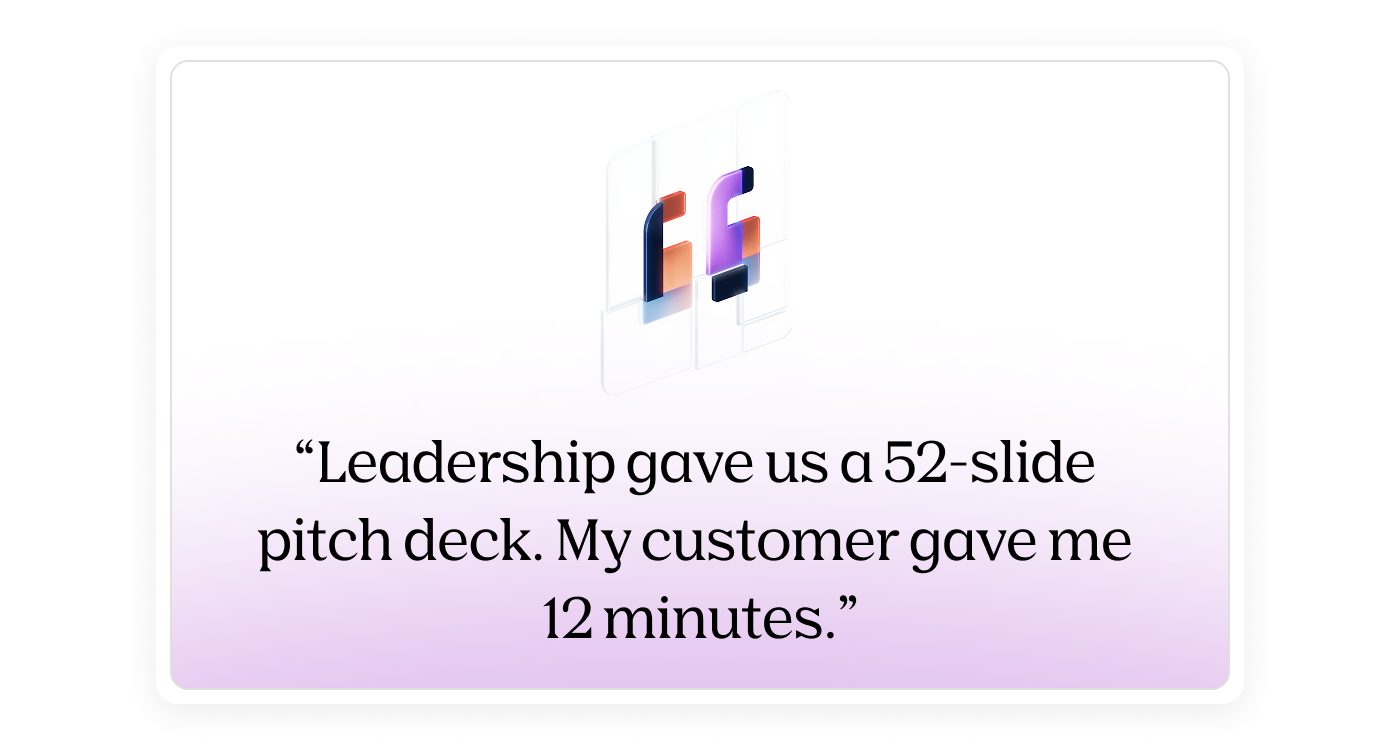
Six weeks later, a seller is sitting across from a procurement director at a chemical distributor. The buyer has 15 minutes between meetings. She wants three things: what changed since last quarter, why your price is higher than the alternative, and whether you can meet a new sustainability requirement she learned about this morning.

The seller has the new narrative somewhere on their laptop. But the moment doesn't call for a narrative. It calls for three specific answers delivered with confidence in the next 90 seconds. That's where reliable execution lives. Not in the deck. In the moment.

I see this pattern everywhere. A medical device rep who knows the clinical evidence but can't navigate four new members of the value analysis committee who weren't there last meeting. A building materials seller who has the right spec sheet but can't adapt when the buyer's priorities shifted overnight because of a tariff change. A CPG rep who prepared for the meeting they expected — not the one they showed up to.

The strategy was right. The knowledge was there. The execution didn't fit the environment.

This is the gap most organizations can't track — because they only focused on communicating the strategy, not checking to make sure it was actionable in the field.

And like the knowledge gap before it, the execution gap compounds. A seller who doesn't have all the necessary knowledge and can't execute the strategy in the moment? That's a result your forecast can't afford to absorb quarter after quarter.

So the question I'd leave you with: is your strategy designed to win in the boardroom, or in the field where your sellers have to deliver it?

Angela Lacey

VP of Sales EMEA, Showpad

LinkedIn
5 Questions

Every issue we sit down with a thought-leader to get their takes on the revenue effectiveness space. Today, we're joined by Spencer Dent, co-founder and co-CEO of Clozd — a win-loss analysis platform and service that interviews buyers to uncover the real reasons deals are won, lost, or stalled. Thousands of conversations later, he has a view of the selling experience that most revenue leaders never get: the buyer's.

This conversation was too good to cut down to size, so we're sharing highlights here — and the full interview is on our blog.

#1 You hear from buyers after every deal. What's the most common gap between what the revenue team believes happened and what the buyer says actually happened?

The biggest gap is often much simpler than people expect: Companies think they know why they won or lost a deal, but they usually don't.

Every one of our longest-tenured customers has a story about winning back a deal they thought was dead. In some cases, a single win-back has paid for their entire win-loss program. Those opportunities were always there — they just didn't see them.

The specific blind spots vary from company to company, but there's almost always a gap between what the company believes happened and what their buyers say actually happened.

#2 Across the buyer interviews you and your team at Clozd have conducted, what separates the deals where the buyer felt confident in their decision from the ones where they had regret or hesitation?

The confident decisions almost always start with deep discovery. Buyers consistently tell us they felt understood. The seller took the time to understand their business, asked thoughtful questions, and focused on solving the right problem instead of rushing into a product pitch.

They connect their capabilities to the customer's specific priorities, reinforce those claims with relevant customer stories, and provide the case studies, references, and proof points buyers need to build internal consensus.

#3 Most revenue organizations say they want to hear from their buyers. But when they actually do, what's the most common reaction, and how often does it lead to action?

It really comes down to culture and sharing the insights with the right people. Organizations with strong executive sponsorship tend to embrace customer feedback — even when it's uncomfortable. They see it as an opportunity to improve rather than something to defend against.

Others struggle. They don't share the insights broadly, the data is siloed or filed away, and very little changes. That's one of the most frustrating things we see, because the real value of win-loss feedback comes through acting on it, not just collecting it.

#4 What's one assumption organizations consistently make about their buyers that your data proves wrong?

That wins and losses are permanent. CRM systems tend to treat every opportunity as final — won or lost — but buyers don't think that way.

We've found that around 10% of closed-won customers are already at risk by the time we interview them. They're experiencing implementation challenges or questioning whether they chose the right solution. The opposite is true for many lost deals. We've seen as many as 40% of closed-lost opportunities remain viable.

The point is that buyers rarely see these decisions as permanent — and neither should you.

#5 A lot of AI investment in sales is going toward preparation — research, talking points, content recommendations. But execution happens live, in the room, under pressure. From what buyers tell you, is better preparation actually translating to better meetings?

Sometimes. The best salespeople are using AI to eliminate administrative work so they can spend more time preparing thoughtfully for customer conversations.

But we've also started hearing that more buyers describe meetings as polished but impersonal. The rep has done their homework and covers all the right talking points — but when the conversation shifts or the buyer raises an unexpected concern, they struggle to adapt. AI can absolutely make sellers more prepared, but it can't replace curiosity, active listening, or the ability to have a meaningful conversation.

Read the conversation with Spencer in full now.
The Dig

Not a data dump. One number — unearthed because it reveals something beneath the surface and examined for the teams confronting it in the field.

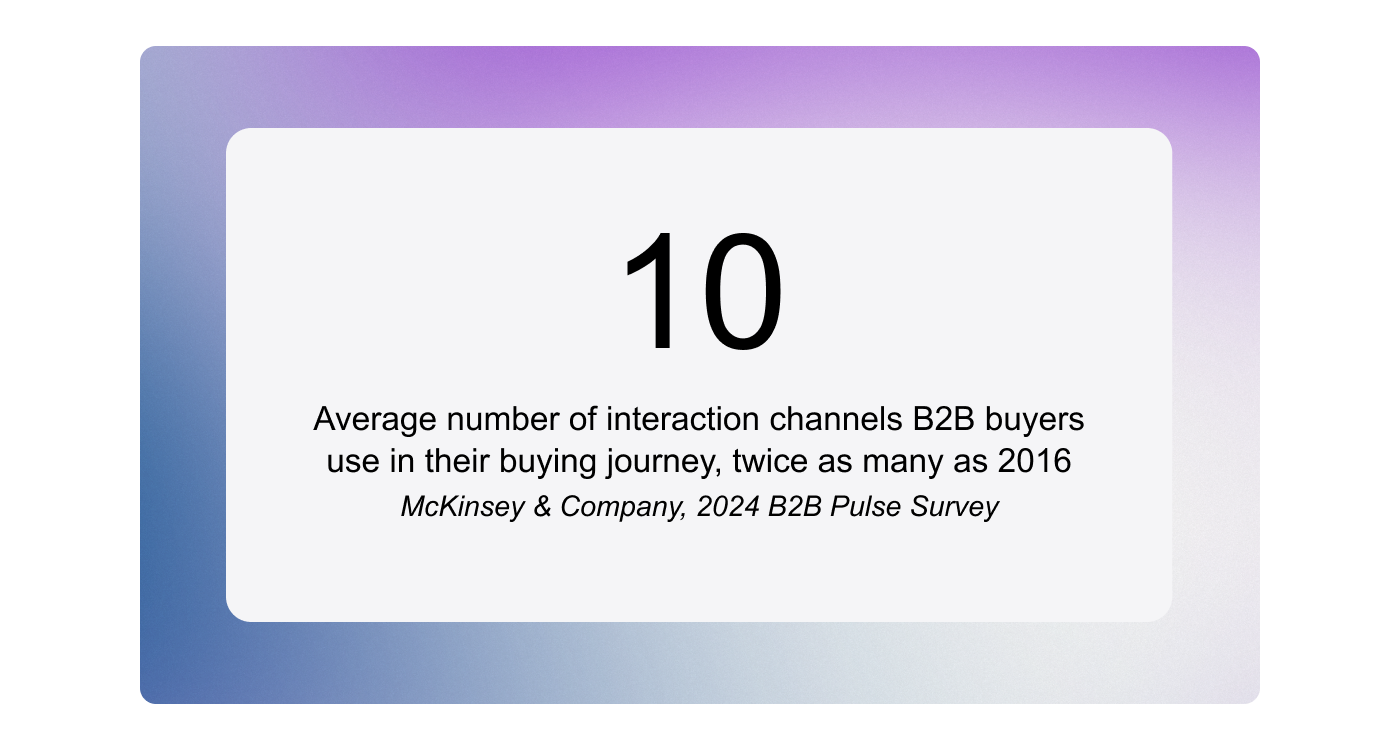
10 — Average number of interaction channels B2B buyers use in their buying journey, twice as many as 2016. Source: McKinsey & Company, 2024 B2B Pulse Survey

Your buyer is moving across 10 different channels before they make a decision. Your website. Email. Video calls. In-person meetings. Mobile apps. E-procurement portals. Online chat. And more.

Your field seller is just one of those touchpoints. And if the experience breaks between any of them — if the promises in the meeting don't match the third-party reviews, if the follow-up email contradicts your website — the buyer notices. More than half of buyers in this study said they'd switch suppliers over a disjointed experience like this.

Execution used to mean delivering a strong meeting. Now it means delivering a consistent, trustworthy journey across ten channels, most of which your seller doesn't control. Start by mapping every touchpoint your buyer encounters between first contact and signed contract. Then ask: Does the experience feel like one company or 10?

Field Conditions

The terrain your team sells across is always shifting. In each issue, we zoom out to a big-picture force reshaping the markets, and zoom in on a ground-level shift worth tracking.

Zoom Out

Zoom Out: Macro force shaping markets

The tariff whiplash — This year, the US announced sweeping tariff changes affecting imports across materials, chemicals, and industrial goods. By summer, some were paused, others expanded, a few restructured entirely. Yet, 51% of companies raised consumer prices to offset higher costs.

For sellers in the field, the impact isn't just price — it's credibility. When your rep quotes a cost in meeting one and it's materially different by meeting two, trust erodes. When your buyer's procurement team is recalculating total cost of ownership every month, your value story has to hold up against numbers that won't sit still.

The companies navigating this well are equipping field teams with scenario-based talking points and real-time cost models that account for volatility. The ones navigating it poorly are emailing updated PDFs and hoping the rep reads them before the next customer visit.

The big question for your revenue team: Can your sellers explain your pricing with confidence in a meeting tomorrow — even if the tariff landscape changed last week?

Zoom In

Zoom In: Micro trend worth watching

The second-meeting drop-off — The pattern: meeting one goes well. The buyer is engaged, the questions are good, the rep leaves feeling optimistic. Then the buyer goes back to their organization and loops in additional stakeholders — a regulatory lead, a finance partner, someone from operations who wasn't in the original conversation.

By meeting two, the room is bigger, the questions are harder, and the seller's original pitch doesn't match what the expanded committee actually needs to hear.

We're watching field-selling organizations start tracking second-meeting conversion rates separately from overall sales stage progression. The ones doing this are finding the drop-off is steeper than expected — and it's revealing exactly where execution breaks. The strategy that earned the first meeting isn't the same strategy that survives the second.

What you should be checking: What happens between meeting one and meeting two? If you don't track it, that execution gap is invisible. And therefore hard to fix.

Overheard in the field

One line. No attribution. What gets said between meetings, after QBRs, or while clocking windshield time. If it sounds familiar, that's the point.

Overheard quote
Effectiveness Essentials
Great Listen

Great Listen

"How to Succeed at Failing" from Freakonomics Radio

A deep look at why orgs struggle to learn from what goes wrong. Assembling gurus from HBS and MIT, plus an array of CEOs, artists, and psychologists, this series investigates environments where execution under duress determines outcomes.

The core insight: most companies have methodologies for measuring success but almost none for systematically getting smarter from failure. Sound familiar?

LISTEN NOW
Great Follow

Great Follow

Dr. Julie Gurner, author of Ultra Successful

One of the best resources on high-performance execution. This psychologist, executive coach and Substack star writes about the habits, systems, and mindsets that separate people who perform consistently from ones who perform occasionally.

Think reputation, decision-making, and long-game strategy. No fluff, no motivational quotes. Just frameworks for doing the hard thing repeatedly. And well.

FOLLOW
Great Read

Great Read

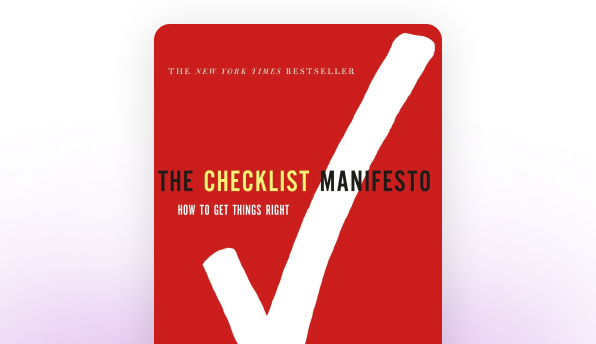
The Checklist Manifesto by Atul Gawande, MD, MPH

We train more. We specialize more. We have access to more knowledge. Yet we still fail. Gawande's conclusion: failure happens because we don't consistently apply what we know. In medicine, aviation, and construction, the surgeon-turned-writer shows how simple checklists prevent avoidable errors in high-stakes, high-complexity environments.

Your sellers operate in similar conditions: niche knowledge demands, intense pressure, zero margin for error. If your team has the expertise but execution still breaks, start here.

READ MORE
Great Idea

Great Idea

Applying Toyota's "Genba" walk for your business

In Toyota's production system, "genba" means "the real place." Leaders are expected to go to where the work happens — not to audit or give feedback, but to understand. The principle: you can't improve what you haven't witnessed firsthand.

Apply it to your revenue team. Have a sales, enablement, or marketing leader at your company spend a full day in the field with a rep. No agenda. No coaching. Just observation. A reality check on how any well-intentioned direction from HQ works in practice.

LEARN MORE
Dispatch from Base Camp

Dispatch from Base Camp

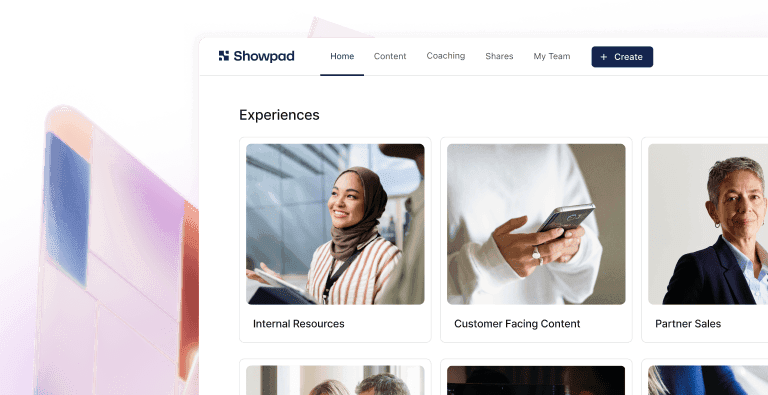
Direct from Showpad HQ. One thing we've built — and why it matters for the teams we serve.

Step into the room, and ahead of the field. Since we announced the Excellence in the Field event series last issue, seats have been filling up. The mix is exactly what we hoped for — revenue leaders from medical devices, manufacturing, CPG, chemicals companies — all willing to get together and compare notes.

One session we're particularly excited about: The New AI Architects — built around the idea that enablement teams are no longer just building programs. They're designing the AI agents their sellers rely on. If you're being asked "what's the return on our AI investments," this is the session that gives you the framework.

If you haven't checked it out yet, now's the time. Pick your city and submit your request to join.

Thanks for reading The Field Report. If this earned a spot in your inbox, get it directly by subscribing here and check out the previous issues while you're there.

SUBSCRIBE HERE