









Marketing leaders live in a constant cycle of planning, executing, and optimizing. Whether you’re kicking off a new fiscal year, preparing for a product launch, or recalibrating mid-quarter, the question is always the same: What’s actually going to move the needle?
You’re reviewing past campaigns, evaluating performance, and scrutinizing budget allocations. But the real challenge isn’t just deciding what to do — it’s understanding why your strategies work (or don’t). Without clear insights into your wins and misses, planning can feel like throwing darts in the dark.
For marketing leaders, the process is as much about reflection as it is about forward-thinking. Yet, without the right data, connecting the dots between past performance and future strategy is tough. Enter Showpad’s Analytics AI, your key to transforming ambiguous data into actionable insights — making your marketing strategy smarter, sharper, and more effective. Let’s talk about the big planning challenges you face, and how Analytics AI can help.
Retrospective insights: what worked and what didn’t?
Before you can plan where to invest next, you need to understand what delivered results in the past. But that’s often easier said than done. Even with access to mountains of data, the challenge lies in piecing together a clear picture. Did that big campaign really deliver the ROI you were expecting? Were certain segments more responsive to a particular type of content?
Here’s where the problem lies: most analytics tools throw numbers at you without providing any meaningful context. You’re left asking, “What’s this data really telling me?”
That’s where Analytics AI steps in. With its natural language processing, you can simply ask, “Which campaign had the highest engagement from enterprise buyers?” In seconds, you’ll have a data visualization paired with a narrative explaining why that campaign performed as it did.
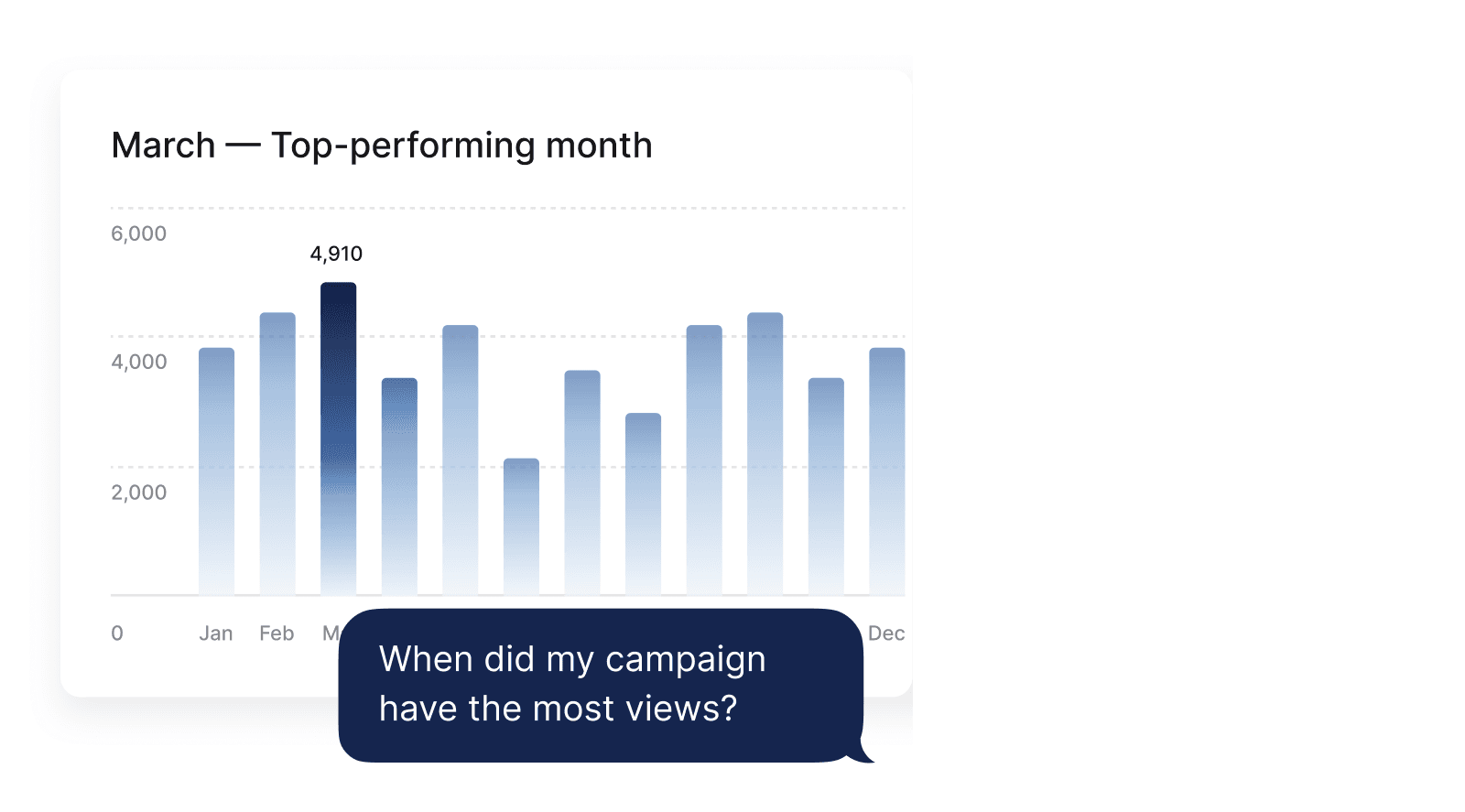
No more sifting through spreadsheets, trying to manually correlate results. With Analytics AI, you can confidently identify your top performers — and understand why they worked — so you can replicate success in your next marketing strategy.
Allocating budget based on what drives impact
One of the toughest parts of planning is budget allocation. You need to invest where it matters, but without a deep understanding of what truly drove past performance, you risk over- or under-investing in critical areas. That’s the challenge: without granular insights into ROI, how do you know if you’re doubling down in the right place?
With Analytics AI, you’re not just looking at surface-level metrics like click-through rates or page views. You’re diving into the specifics of what content, campaigns, and channels actually contributed to revenue. Whether assessing a specific content piece or measuring an entire program’s ROI, Analytics AI provides insights that go beyond the numbers. It tells the full story, helping you allocate resources where they’ll have the greatest impact.
“Don't get stuck in strategy mode when you could be in action mode.”

Predicting future trends: use data to anticipate what’s next
Building a strong marketing strategy isn’t just about looking backward. It’s about anticipating the market trends and buyer behaviors that will shape your future direction.
But let’s face it — predictions are tricky without the right data to back them up.
Analytics AI doesn’t just give you a snapshot of what happened in the past. By analyzing engagement trends, buyer actions, and content performance over time, it helps you identify patterns that can inform your future strategy.
Maybe certain content types consistently resonate with a specific buyer persona, or maybe engagement spikes during a particular time of year. These insights empower you to craft a more precise, data-driven marketing strategy built on real-world trends — not gut instinct alone.
Speed and clarity in one platform
The planning process is all about making decisions: where to focus, what to invest in, and how to drive growth. But those decisions can stall when you’re waiting on data reports or struggling to interpret complex analytics.
The result? A drawn-out planning cycle that keeps you stuck in strategy mode instead of action mode.
With Analytics AI, you don’t have to wait on anyone else to get the insights you need. Ask questions in plain language — like “Which pieces of content drove the most engagement with C-level buyers last quarter?” — and instantly get a visual, narrative-driven answer. It’s fast, intuitive, and gives you the clarity you need to make decisions on the fly, keeping your planning process agile and efficient.
“If only a few people on your team understand the performance data, it's hard to drive a cohesive, data-backed marketing strategy.”
Aligning teams with a unified understanding of performance
Planning isn’t just about your understanding of the data — it’s about getting your entire team aligned around what’s working and where you need to go next. If only a few people on your team understand the performance data, it’s hard to drive a cohesive, data-backed marketing strategy.
That’s why Analytics AI is designed to be accessible for everyone, not just data analysts. The natural language interface and intuitive visualizations make it easy for your entire team to access and understand the insights that matter. This transparency ensures everyone is aligned on what’s driving impact and where your collective focus should be.
Make data your competitive advantage
Don’t rely on guesswork or incomplete insights. Analytics AI empowers marketing leaders to make smarter, data-driven decisions that fuel growth and drive results. With the ability to quickly generate insights, understand what’s working, and allocate resources effectively, you’ll be ready to take on your next planning cycle with confidence.
Turn your data into a strategic advantage
See how Analytics and Insights can power your marketing strategy.

Frequently asked questions
Analytics AI takes the guesswork out of strategic planning by turning raw data into clear, contextual insights. Instead of manually combing through spreadsheets and dashboards, you can ask questions in plain language — like “What content drove the most pipeline last quarter?” — and get instant, narrative-driven answers complete with visualizations. This means you can quickly identify what’s working, understand why it’s working, and make informed decisions about where to invest your time and budget. It’s a faster, smarter way to build a marketing strategy grounded in real performance data.
One of the biggest challenges in marketing planning is knowing where your budget will have the most impact. Analytics AI goes beyond surface-level metrics like impressions or click-through rates to show you which content, campaigns, and channels actually contributed to revenue. With that level of granularity, you can confidently reallocate spend toward the programs and tactics that are driving results — and pull back from the ones that aren’t.
Not at all. Analytics AI is built for everyone on your team, regardless of technical skill. The natural language interface lets you ask questions the way you’d ask a colleague — no SQL queries, no complex filters, no waiting on a data team to pull reports. The platform responds with intuitive visualizations and clear narrative explanations, so anyone can access and act on the insights they need. That accessibility is what makes it so powerful for aligning entire teams around a unified, data-backed marketing strategy.